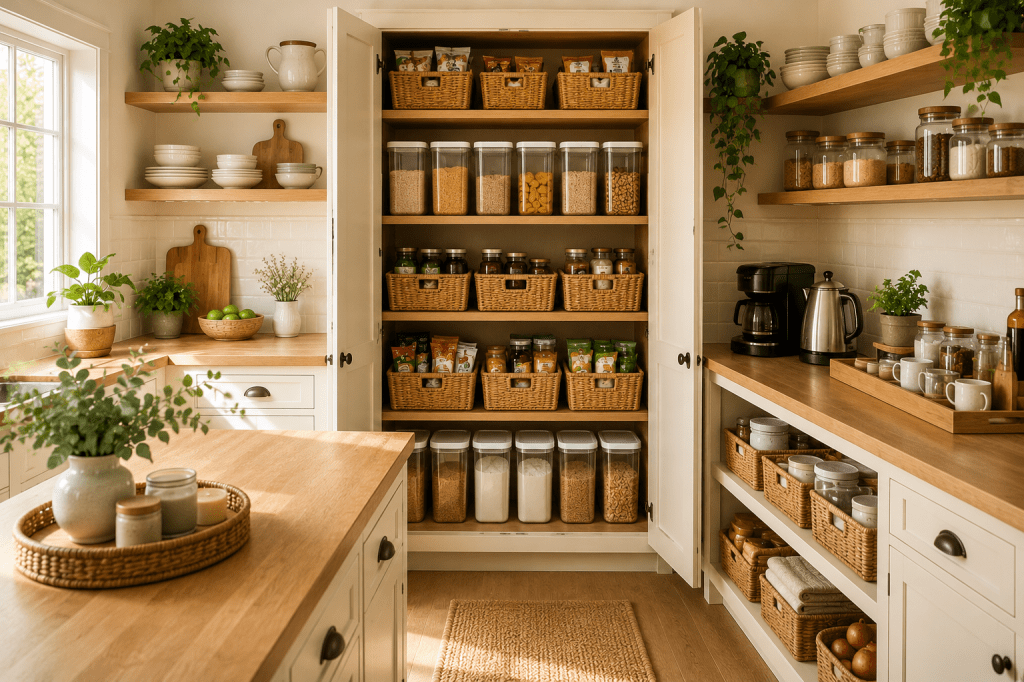
A well-organized kitchen can make everyday cooking easier, faster, and much more enjoyable. But creating a clutter-free kitchen doesn’t mean you need an expensive renovation or a huge amount of storage space.
With a few smart organization ideas, you can make better use of cabinets, drawers, countertops, and even those awkward little spaces that often go unused. These 15 easy kitchen organization ideas will help you create a kitchen that feels cleaner, calmer, and easier to maintain.
1. Keep Your Countertops as Clear as Possible
Clear countertops instantly make a kitchen look cleaner and more spacious. Keep only the things you use every day—such as a coffee maker or kettle—on display and store less frequently used appliances inside cabinets.
Use a simple tray to group everyday essentials like cooking oil, salt, and utensils. This keeps everything accessible while making the countertop look intentional rather than cluttered.
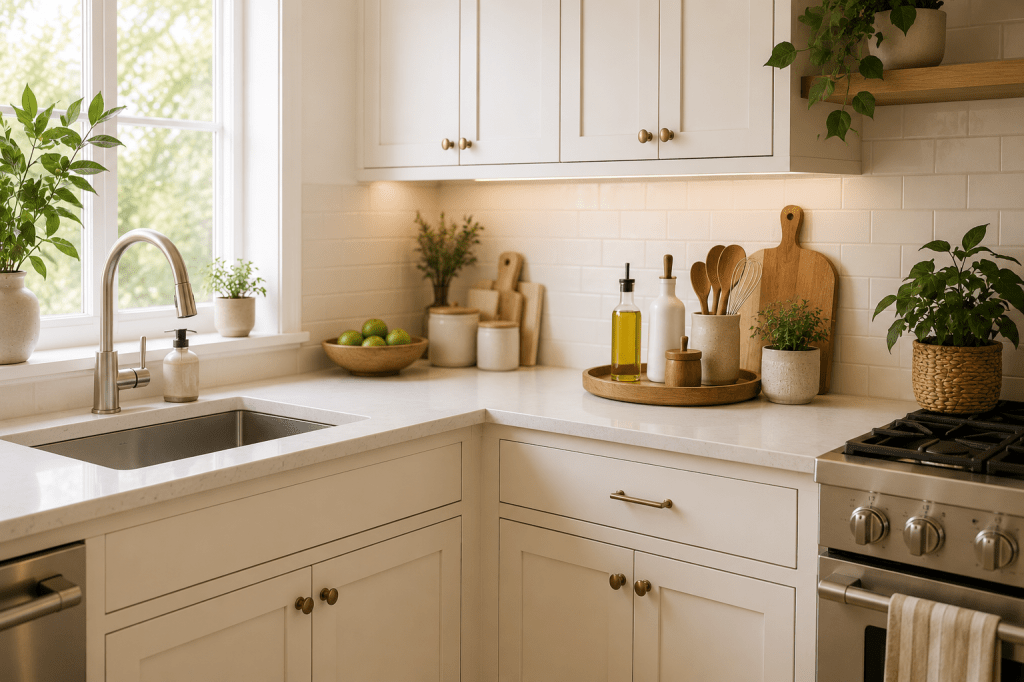
2. Organize Drawers With Dividers
Kitchen drawers can quickly become messy when utensils, cooking tools, and small accessories are mixed together. Simple drawer dividers help give everything a dedicated place and make everyday items much easier to find.
Use adjustable dividers or small organizers to separate cutlery, wooden spoons, measuring tools, and other kitchen essentials. Keeping similar items together also makes it much easier to maintain an organized kitchen over time.
🛍️ Shop This Idea: An expandable drawer organizer keeps cutlery, utensils and everyday kitchen tools neatly separated, making it much easier to find exactly what you need.
View Kitchen Drawer Organizers on Amazon →https://link.amazon/B02MpIU6u
View Kitchen Drawer Organizers on Amazon → https://link.amazon/B0j30jm3v
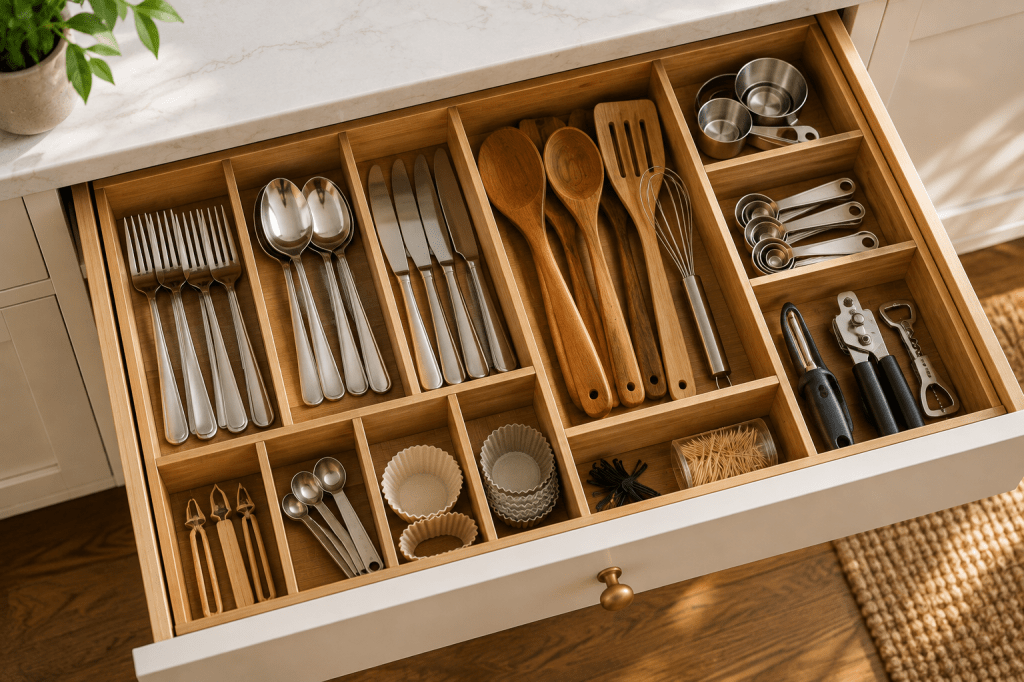
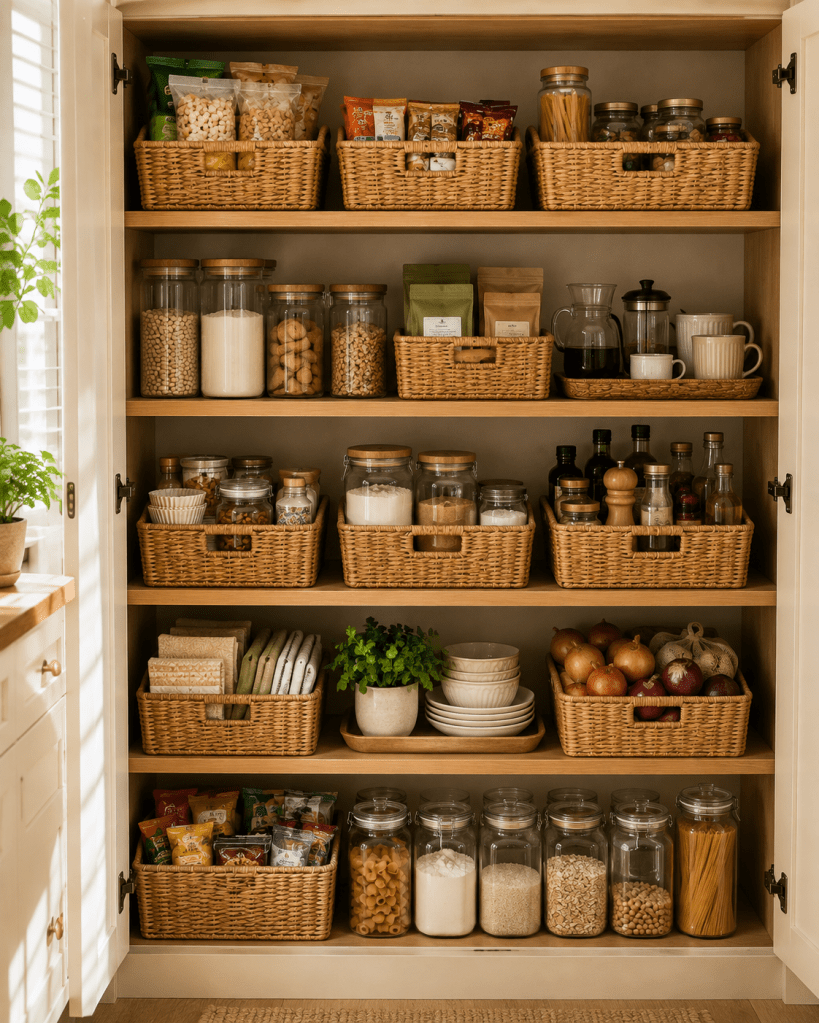
3. Use Clear Containers for Pantry Staples
Clear containers make pantry organization easier because you can immediately see what you have and when something needs to be refilled. They also help reduce the visual clutter created by different food packages.
Transfer frequently used dry foods such as pasta, rice, oats, flour, cereal, and lentils into matching airtight containers. Arrange them neatly by category and keep the items you use most often within easy reach.
🛍️ Shop This Idea: Clear airtight containers keep pantry staples fresh while making shelves look neat and organized. They’re perfect for storing flour, rice, pasta, cereal, lentils and other everyday essentials.
View Airtight Pantry Containers on Amazon → https://link.amazon/B07i8u8Nv
View Airtight Pantry Containers on Amazon →https://link.amazon/B05Gf4Kcr

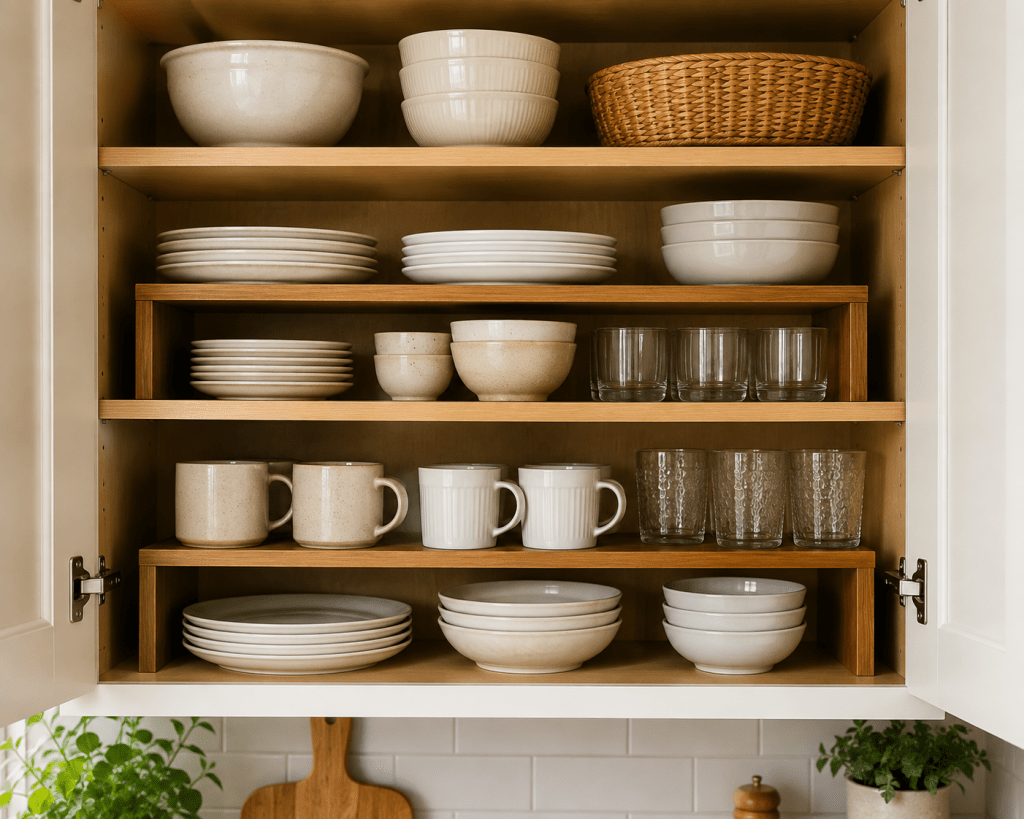
4. Use Shelf Risers Inside Cabinets
Deep kitchen cabinets often waste vertical space. Shelf risers create an extra level so you can store plates, bowls, mugs, and other everyday dishes without stacking everything on top of each other.
Use simple wooden or metal risers to separate different types of dishes. This makes items easier to see and grab while helping your cabinets stay neat.
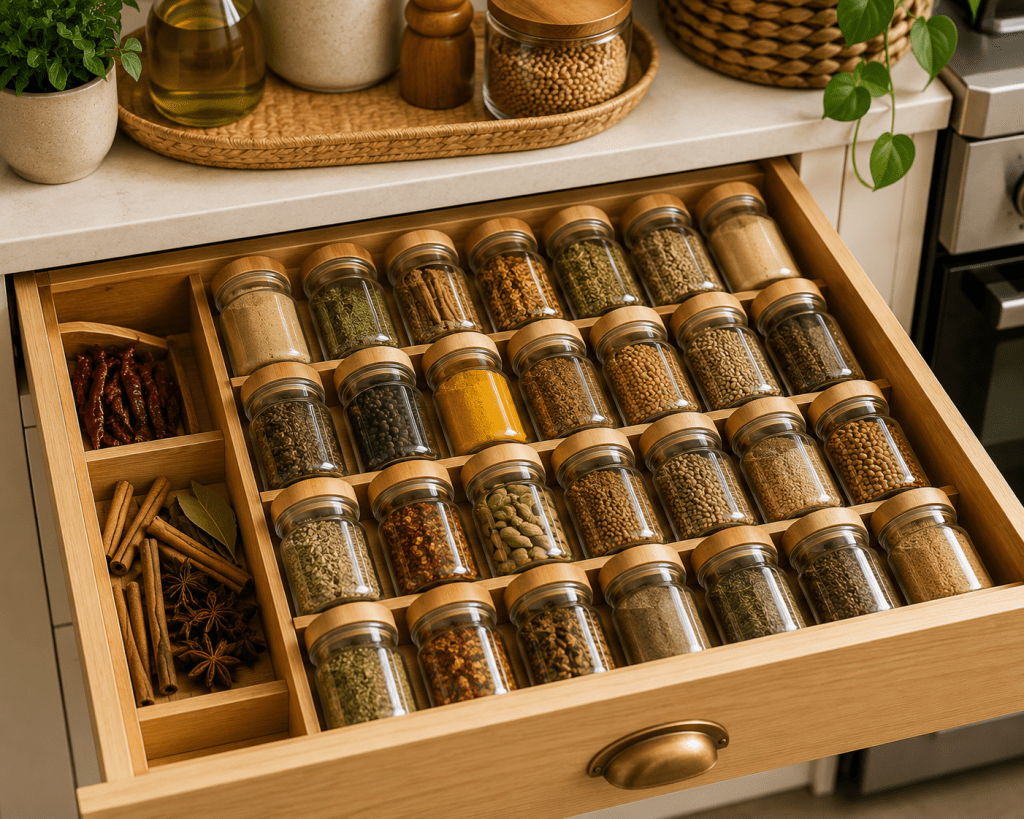
5. Organize Spices in One Dedicated Area
Keeping spices together makes cooking much easier and prevents half-used jars from disappearing at the back of a cabinet. Choose one drawer, cabinet shelf, or small spice rack specifically for your seasonings.
Arrange spice jars so you can see everything at a glance. Keeping frequently used spices toward the front also saves time and helps prevent buying duplicates.
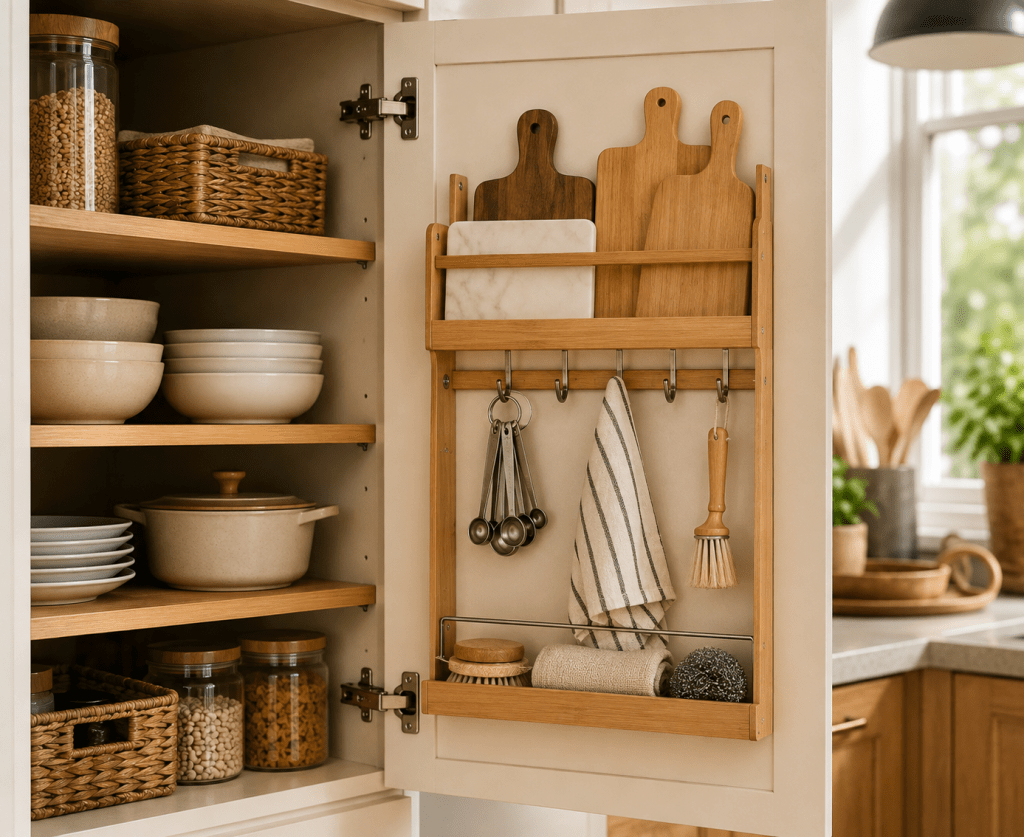
6. Use the Inside of Cabinet Doors
The inside of cabinet doors is often completely unused, but it can provide valuable extra storage. Add slim racks, hooks, or small organizers to hold lightweight kitchen essentials without taking up shelf space.
This works especially well for measuring spoons, pot lids, cutting boards, cleaning cloths, or small packets. Just make sure the organizer is slim enough for the cabinet door to close comfortably.
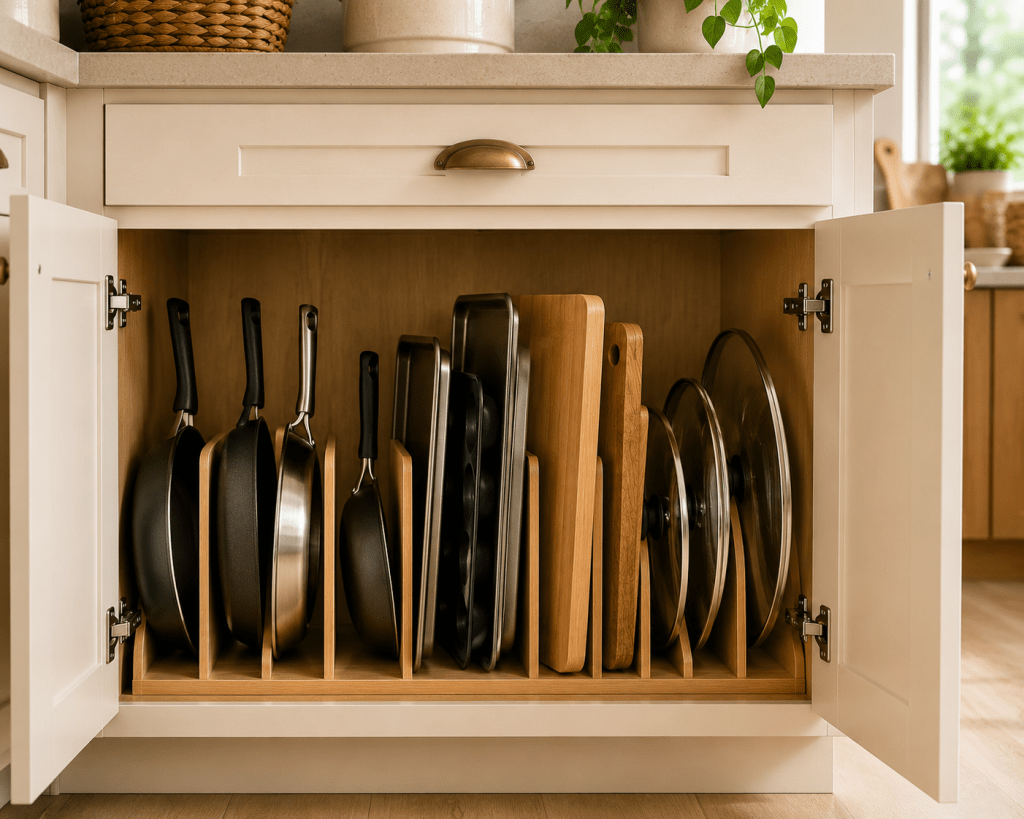
7. Organize Pots and Pans Vertically
Stacking pots, pans, and lids on top of each other can make cabinets difficult to use. Vertical organizers let you store cookware separately, so you can easily grab the pan or lid you need without moving everything else.
Use a sturdy rack inside a lower cabinet to organize frying pans, baking trays, cutting boards, and pot lids. It also helps protect cookware from scratches and keeps the cabinet looking tidy.
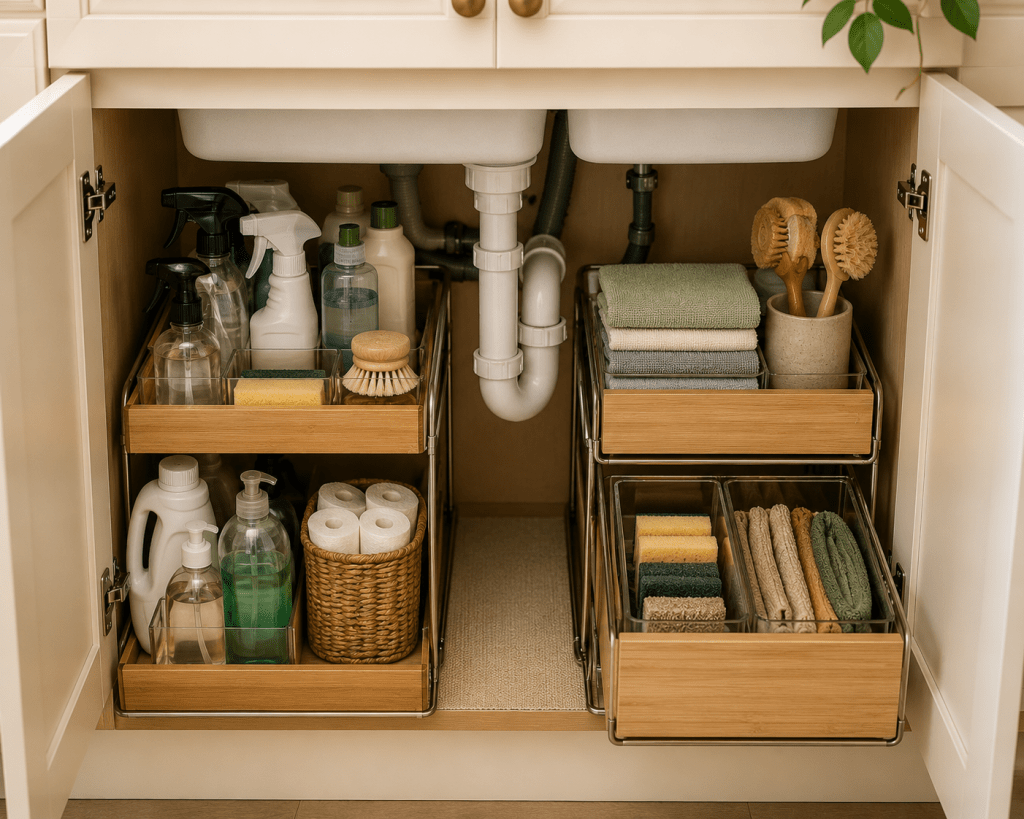
8. Create an Organized Under-Sink Storage Area
The cabinet under the kitchen sink can easily become one of the messiest spaces in the kitchen. Using a few containers and organizers makes cleaning products easier to find while keeping everything neat.
Use pull-out bins or baskets to group cleaning sprays, sponges, dishwasher supplies, and cloths. Keep frequently used products toward the front and avoid overcrowding the area around the plumbing.
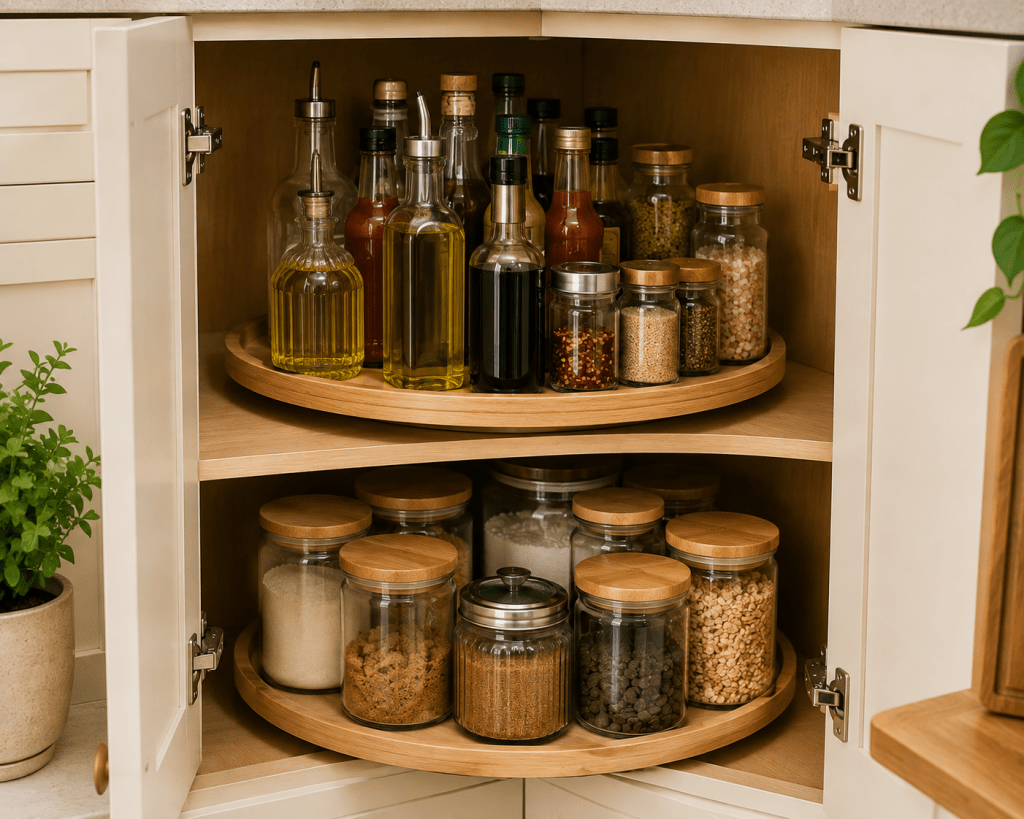
9. Use Turntables for Hard-to-Reach Items
Deep cabinets and pantry corners can make bottles and jars difficult to reach. A simple rotating turntable, often called a Lazy Susan, lets you access everything without pulling items out from the front.
Use one for cooking oils, sauces, condiments, jars, or baking supplies. Group similar items together and avoid overcrowding the turntable so it rotates easily.
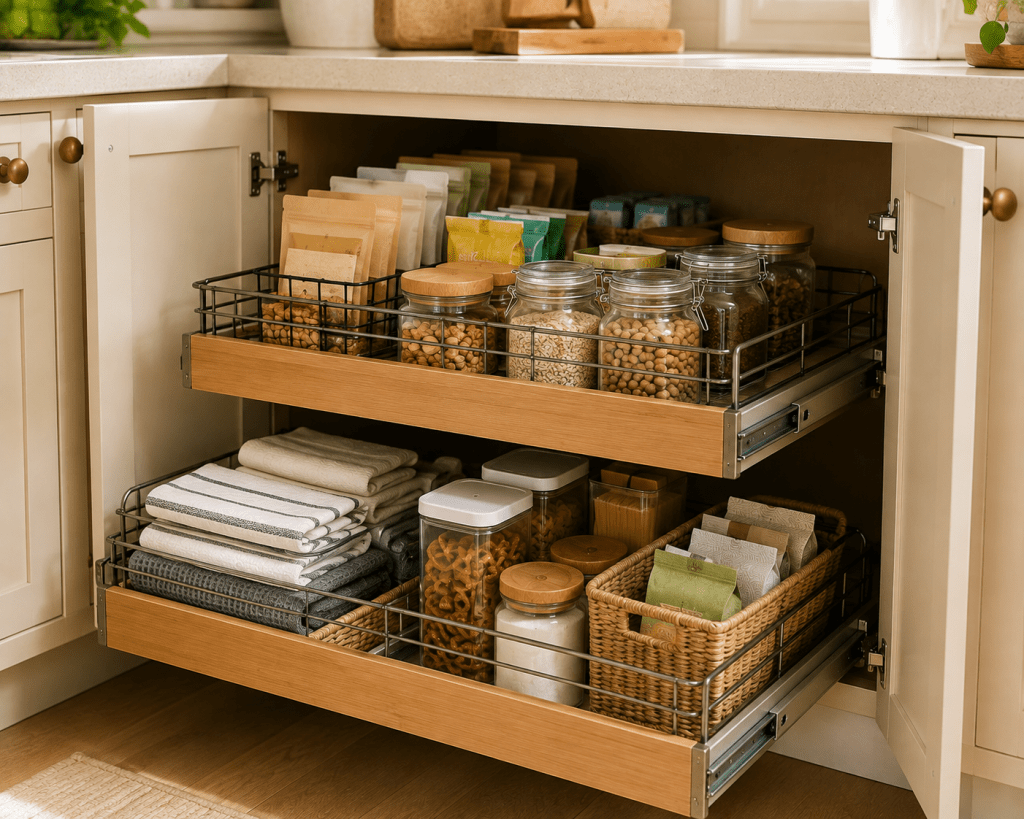
10. Add Pull-Out Baskets to Deep Cabinets
Deep cabinets offer plenty of storage, but items at the back can easily become forgotten. Pull-out baskets allow you to use the full depth of the cabinet while keeping everything accessible.
Use them for snacks, packaged foods, baking supplies, kitchen linens, or everyday pantry items. Group similar products together so you can simply slide the basket out and find what you need.
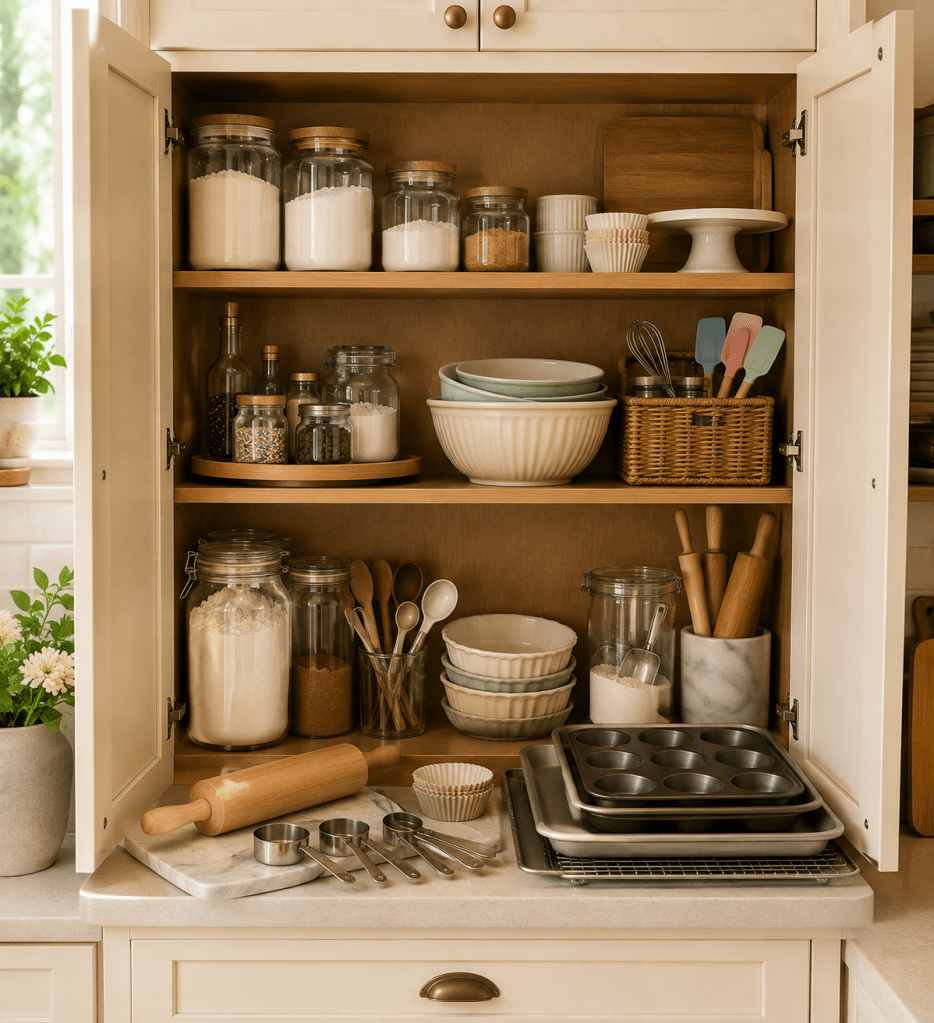
11. Create a Dedicated Baking Zone\
If you bake regularly, keeping all your baking essentials together can save a lot of time. Instead of storing flour, sugar, measuring tools, and baking accessories in different parts of the kitchen, dedicate one cabinet or shelf to them.
Keep flour, sugar, baking ingredients, mixing bowls, measuring cups, and frequently used baking tools together. Clear containers and small baskets can help keep everything neat and easy to grab.
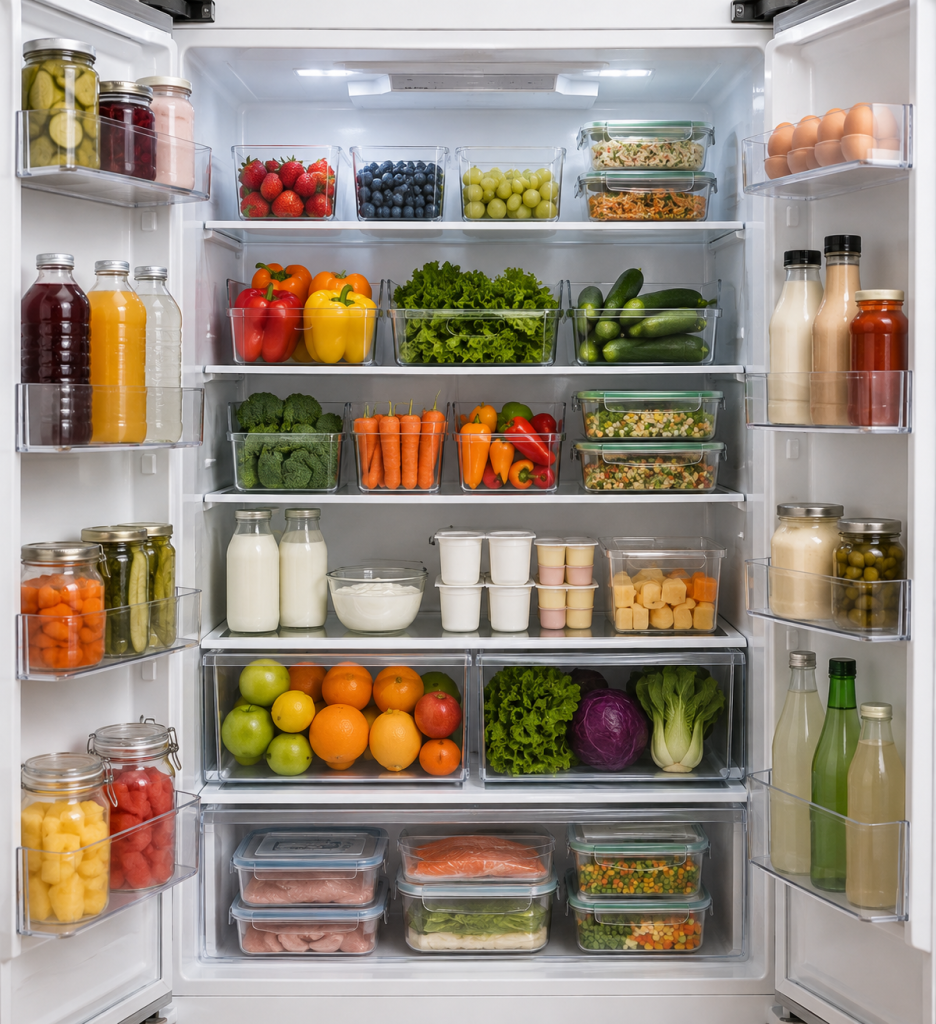
12. Organize Your Refrigerator With Zones
An organized refrigerator makes it easier to see what food you already have, reduces waste, and helps keep everyday ingredients within easy reach.
Create simple zones for fruits, vegetables, dairy, drinks, snacks, and meal-prep ingredients. Use clear bins to group smaller items and keep frequently used foods toward the front.
13. Use Baskets to Group Similar Items
Baskets are an easy way to keep loose kitchen items from spreading across shelves and cabinets. They also make it much easier to pull out an entire group of items instead of searching through everything individually.
Use woven or simple storage baskets for snacks, tea and coffee supplies, baking ingredients, reusable bags, kitchen linens, or packaged foods. Keeping similar items together creates a cleaner and more organized look.
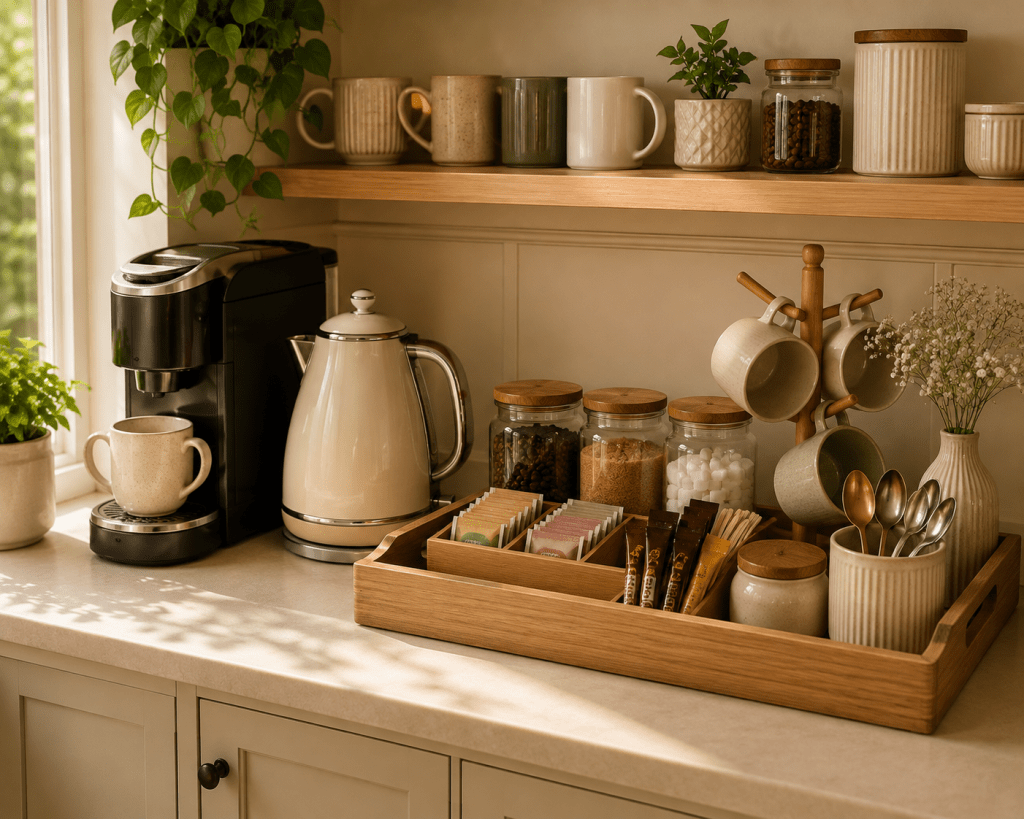
14. Create a Tea and Coffee Station
Keeping your tea and coffee essentials together makes busy mornings easier and prevents mugs, packets, and supplies from cluttering different areas of the kitchen.
Choose one small section of your countertop or cabinet for your coffee maker or kettle, mugs, tea bags, coffee, sugar, and other everyday essentials. Use a tray or small basket to keep everything neatly grouped.
15. Do a Quick Weekly Kitchen Reset
The best organization system only works when it’s maintained. Set aside a few minutes once a week to return misplaced items, clear expired food, wipe shelves, and tidy your countertops.
Check the refrigerator and pantry before grocery shopping, put everything back in its designated place, and remove anything you no longer need. A simple weekly reset prevents clutter from building up again and makes your kitchen much easier to maintain.
Final Thoughts
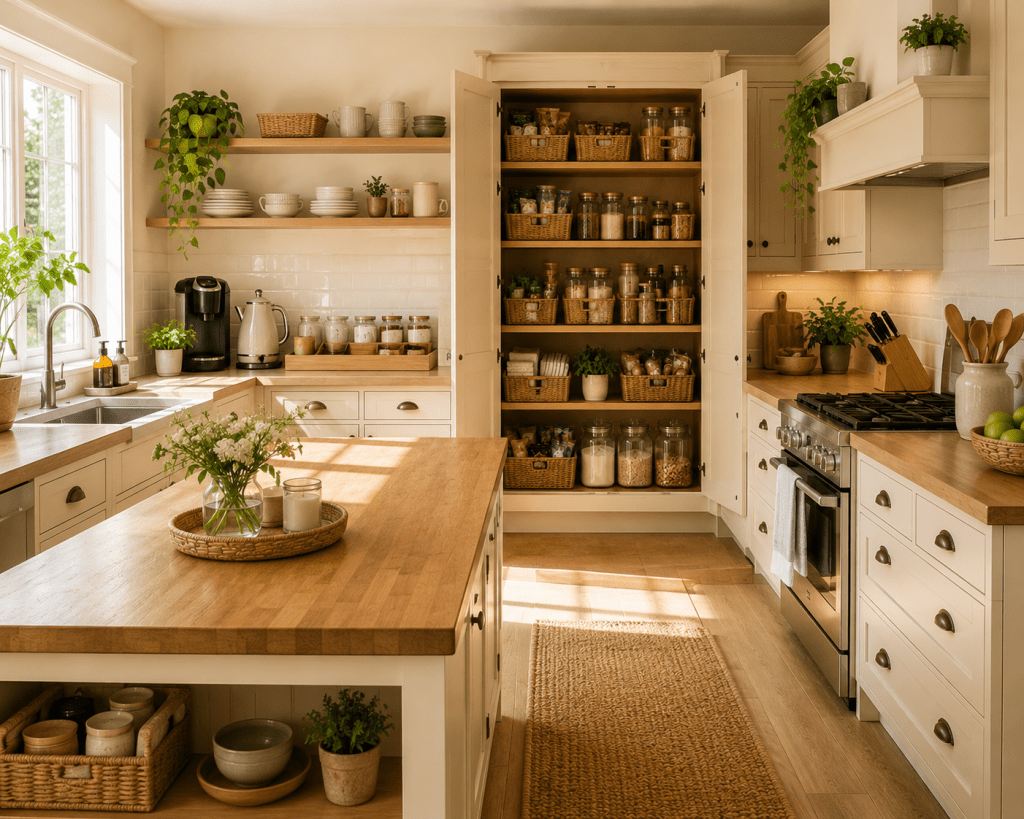
An organized kitchen doesn’t have to require a complete makeover or expensive storage solutions. Small changes—like using drawer dividers, clear containers, baskets, shelf risers, and dedicated storage zones—can make a huge difference in how your kitchen looks and functions.
Start with the areas that create the most clutter and organize them one at a time. Once everything has a dedicated place, keeping your kitchen clean and organized becomes much easier.


Leave a comment