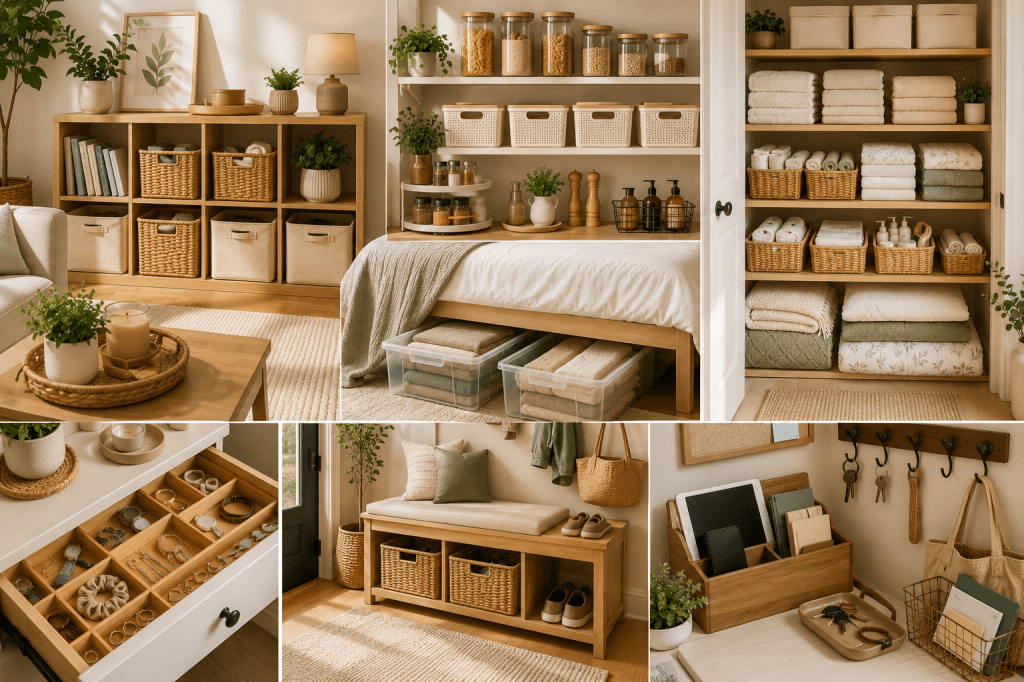
A cluttered home can make even a beautiful space feel smaller and more stressful. The good news is that getting organized doesn’t mean throwing everything away or spending a fortune on complicated storage systems.
With a few smart organization ideas, you can make better use of cabinets, walls, drawers, closets, and those awkward spaces that often go unused. Simple solutions such as baskets, drawer dividers, floating shelves, under-bed storage, and labeled containers can make everyday items much easier to find while keeping your home looking clean and stylish.
Whether you’re organizing a small apartment or a larger family home, these 15 genius home organization ideas will help you declutter room by room and create spaces that are easier to maintain
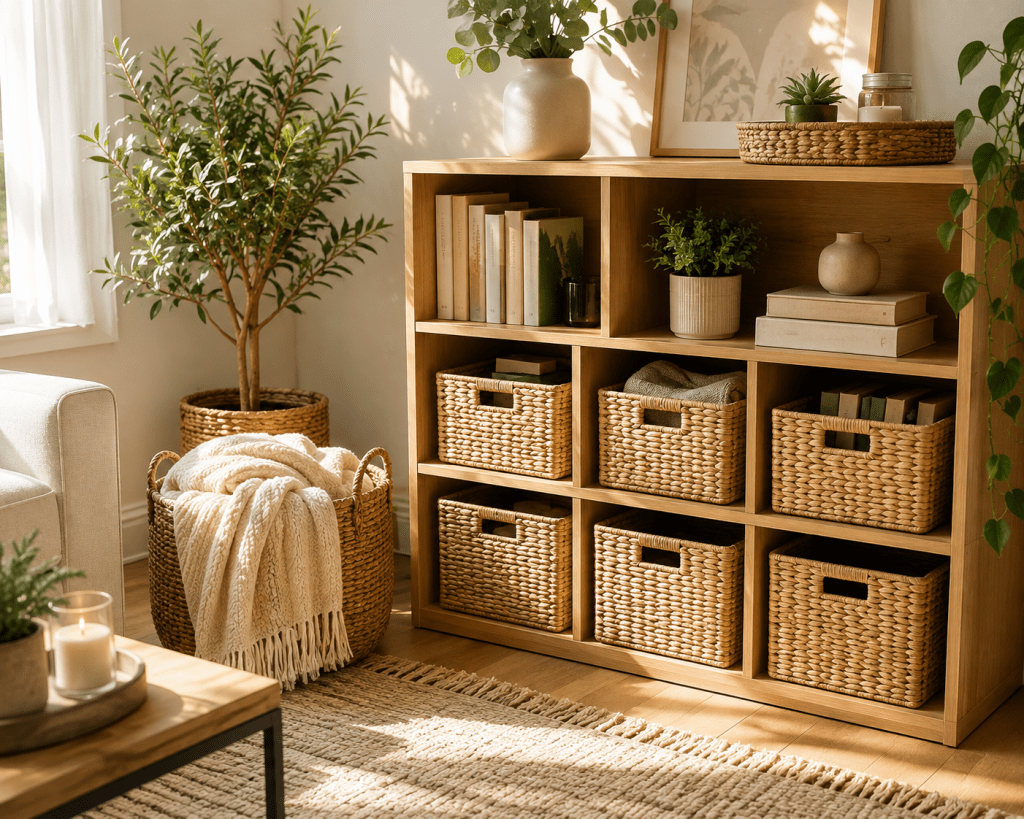
1. Organize Clutter with Stylish Storage Baskets
Storage baskets are one of the easiest ways to hide everyday clutter while still keeping frequently used items within reach.
Use woven or fabric baskets in the living room for blankets, toys, books, magazines, or electronics. Smaller baskets work beautifully inside cabinets and shelves for organizing items that would otherwise look messy.
For a more polished look, choose baskets in similar colors and materials rather than mixing too many different styles. Neutral woven baskets are especially versatile because they work with almost any home décor.
🛍️ Shop This Idea: Woven storage baskets make it easy to hide everyday clutter while adding warmth and texture to your home. Use them for blankets, toys, books, magazines or other frequently used essentials.
View Woven Storage Baskets on Amazon → https://link.amazon/B07KFDzPN
2. Use Drawer Dividers to Control Small Clutter
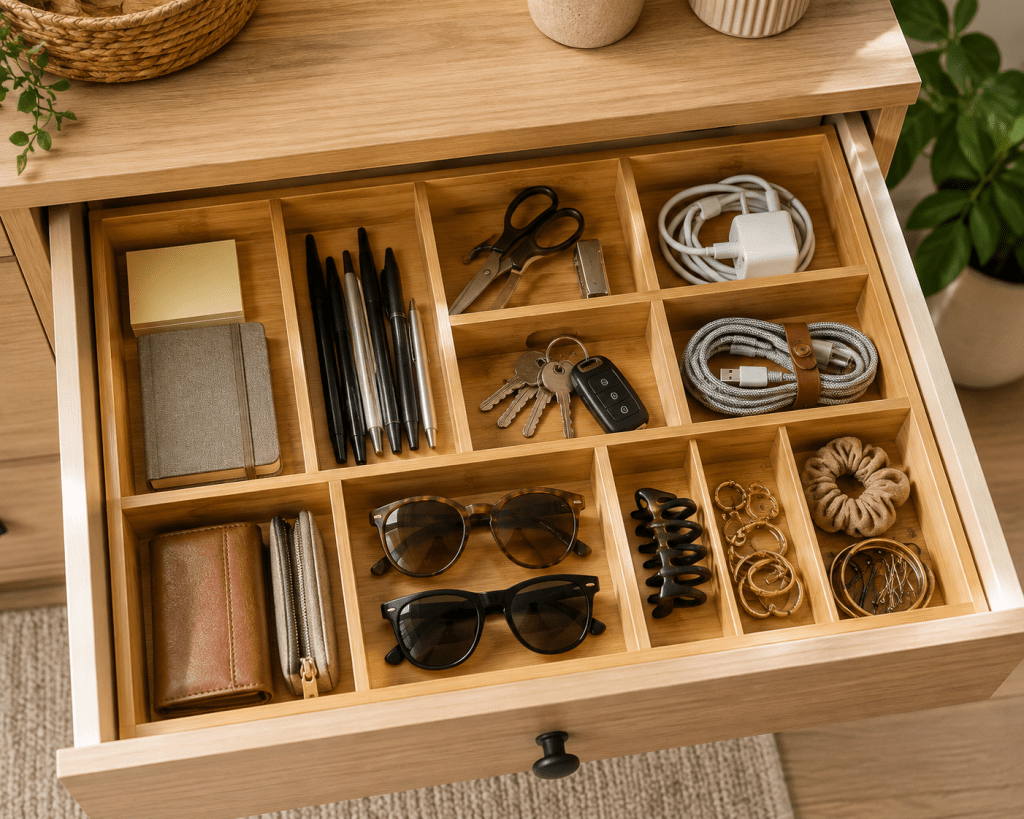
Drawers can become messy very quickly when small items are stored together without any separation. Drawer dividers create dedicated sections so everything has its own place and is much easier to find.
Use adjustable dividers or small organizer trays for everyday items such as stationery, charging cables, keys, accessories, makeup, or household essentials. Instead of stacking items on top of each other, arrange them so you can see everything as soon as you open the drawer.
This simple change can make even a small drawer hold much more while preventing clutter from building up again.
🛍️ Shop This Idea: Adjustable drawer dividers turn messy drawers into neat, easy-to-use sections. They’re perfect for separating clothing, accessories and everyday essentials while making everything easier to find.
View Adjustable Drawer Dividers on Amazon → https://link.amazon/B021SQkJm
3. Maximize Closet Space with Shelf Dividers
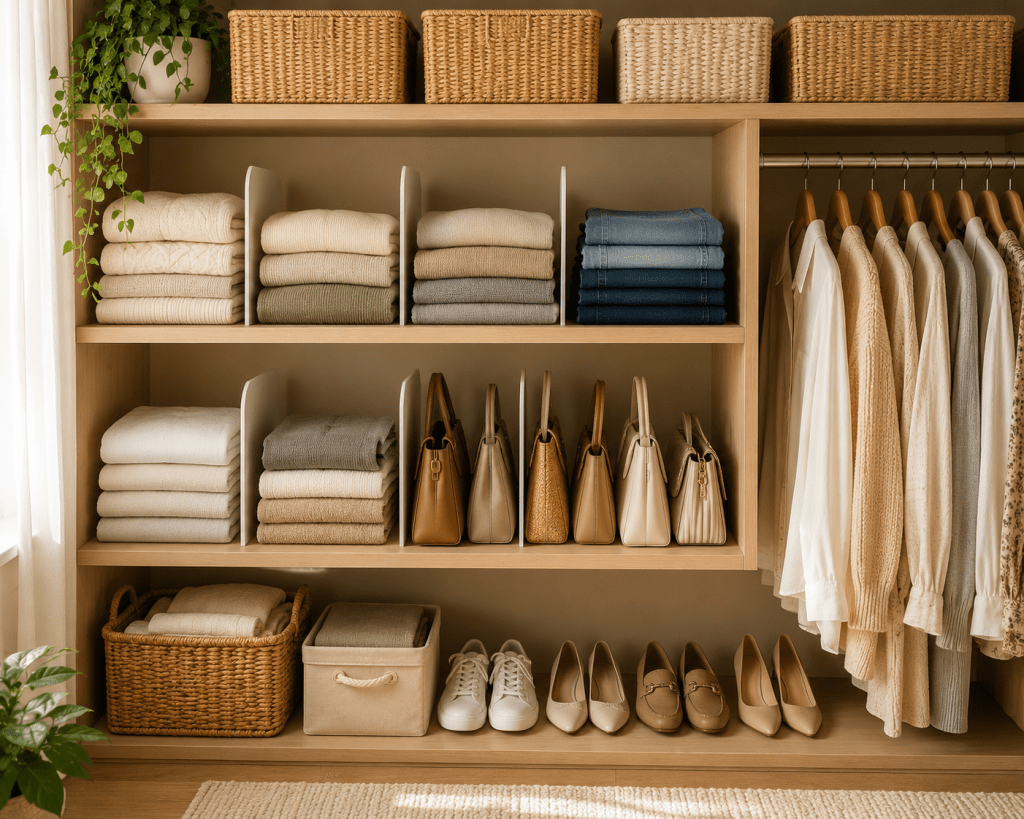
Closet shelves often become messy when folded clothes, handbags, towels, and linens are stacked together. Shelf dividers create separate sections so stacks stay upright and items are easier to see and reach.
Use dividers to create dedicated spaces for sweaters, jeans, handbags, towels, and bedding. You can also add matching storage boxes or baskets to the upper shelf for seasonal or less frequently used items.
Keeping similar items together not only makes the closet look cleaner—it also makes it much easier to maintain over time.
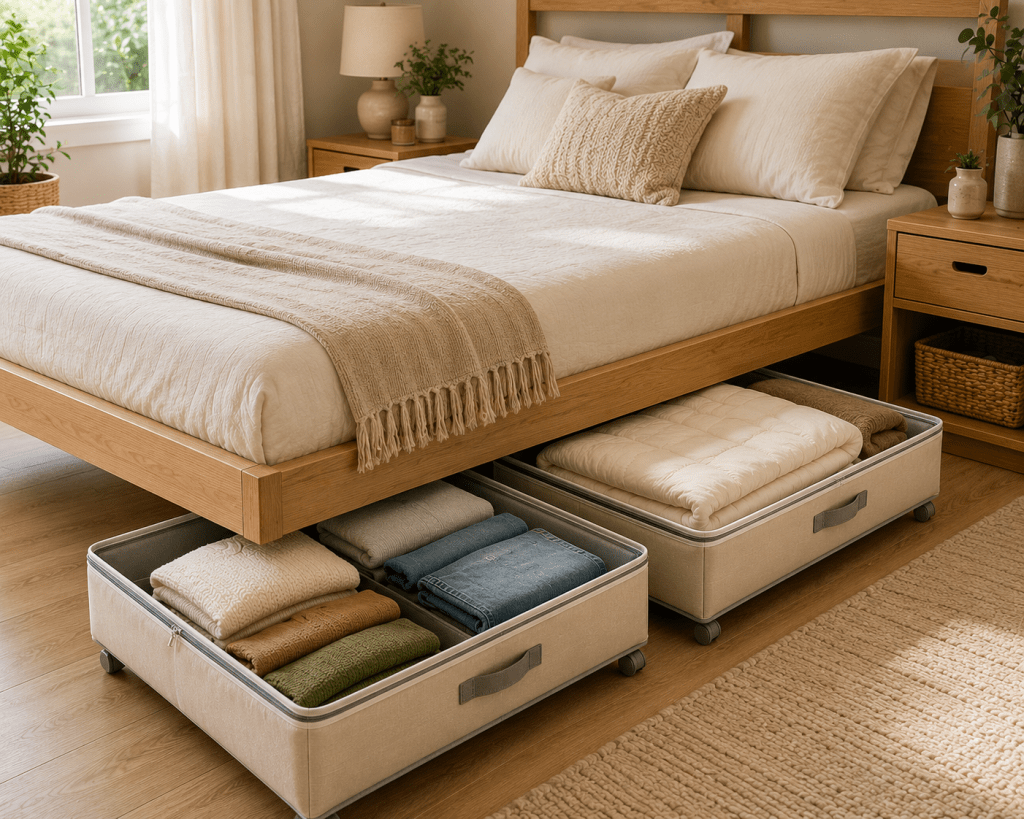
4. Use Under-Bed Storage for Hidden Organization
The space underneath your bed is valuable storage that often goes unused. Using it wisely can free up closet and drawer space while keeping less frequently used belongings completely out of sight.
Low-profile storage boxes, zippered fabric bags, or rolling under-bed containers are ideal for storing seasonal clothes, spare bedding, extra blankets, shoes, and handbags.
Choose containers that slide out easily and keep similar items together. If you’re organizing a smaller bedroom, this is one of the easiest ways to gain extra storage without adding another piece of furniture.
🛍️ Shop This Idea: Make use of the empty space beneath your bed with slim storage containers. They’re perfect for keeping seasonal clothes, extra bedding, blankets and other rarely used items neatly tucked away and protected from dust.
View Under-Bed Storage Containers on Amazon → https://link.amazon/B06OJuyfz
View Under-Bed Storage Containers on Amazon → https://link.amazon/B093SLvbe
5. Organize Shoes with a Slim Shoe Storage Cabinet
Shoes scattered around an entryway can make the entire home feel cluttered. A slim shoe cabinet is especially useful in apartments and small homes because it provides organized storage without taking up much floor space.
Choose a narrow cabinet with tilt-out compartments or multiple shelves so everyday shoes remain easy to reach. Keep only frequently worn pairs near the entrance and move seasonal or special-occasion shoes into closet storage.
The top of the cabinet can also become a practical drop zone for keys, sunglasses, a small tray, or everyday essentials.
🛍️ Shop This Idea: Keep shoes neatly arranged and off the floor with a compact shoe organizer. A slim design is especially useful for entryways, bedrooms and smaller spaces where you want extra storage without creating more clutter.
View Shoe Storage Organizers on Amazon → https://link.amazon/B0gkHL36f

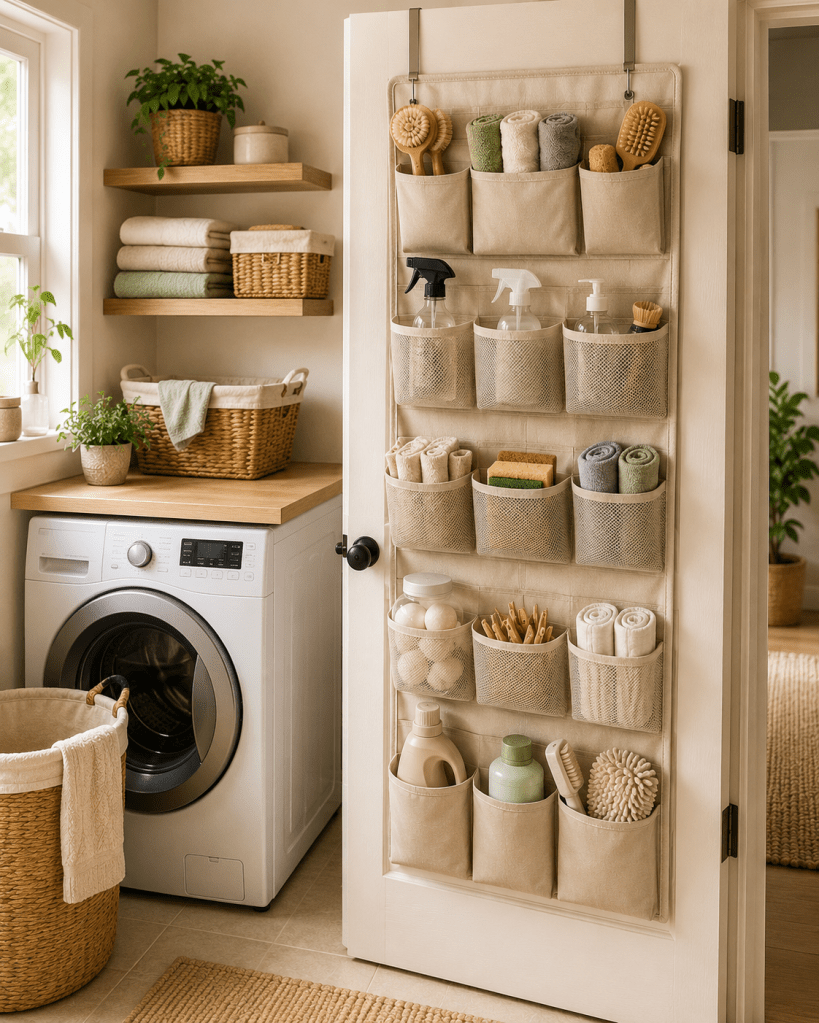
6. Use Over-the-Door Storage
The back of a door is often completely unused, but it can provide valuable vertical storage without taking up any floor space.
An over-the-door organizer works especially well in bedrooms, bathrooms, laundry rooms, and closets. Use pockets or small baskets to organize everyday items such as accessories, toiletries, cleaning supplies, scarves, small towels, or household essentials.
The key is to avoid overfilling it. Keeping similar items grouped together makes the organizer look tidy and ensures everything remains easy to grab.
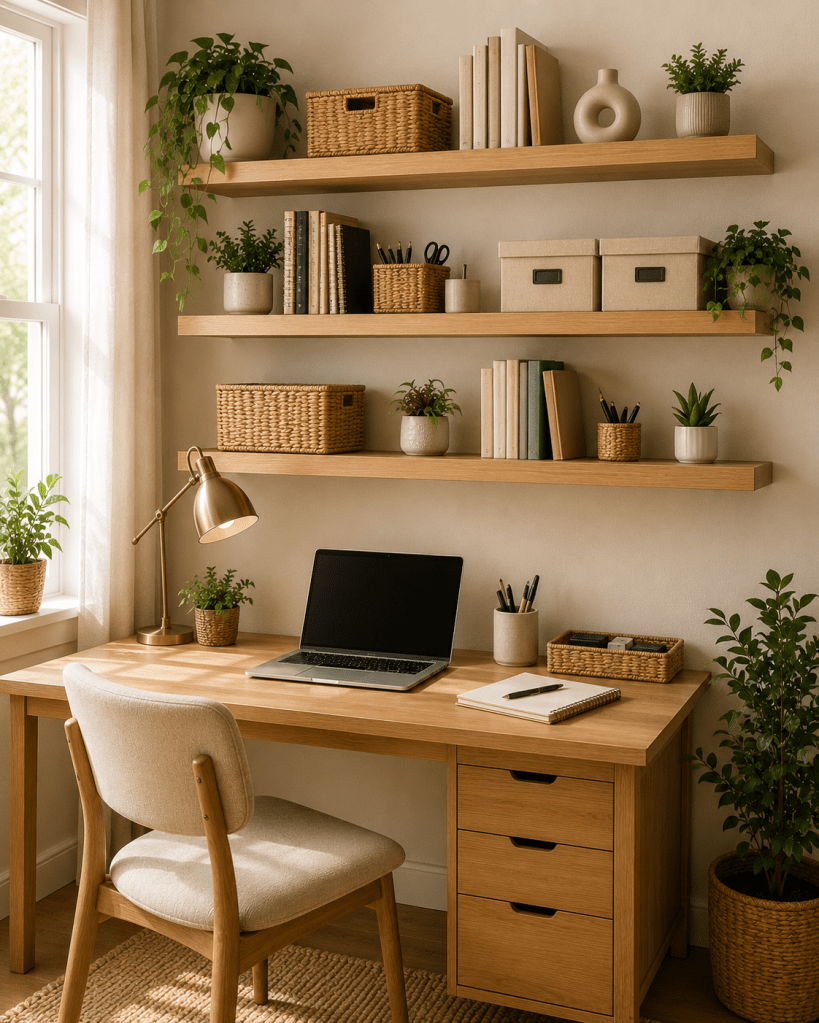
7. Add Floating Shelves to Use Empty Wall Space
When floor space is limited, walls can provide valuable extra storage. Floating shelves help organize everyday items while keeping counters, tables, and other surfaces free from clutter.
Install them above a desk, sofa, bathroom counter, or in an unused corner. Use a combination of small baskets, books, decorative boxes, and frequently used essentials so the shelves are both practical and attractive.
Avoid filling every inch. Leaving some open space between items keeps the shelves looking organized instead of becoming another cluttered area.
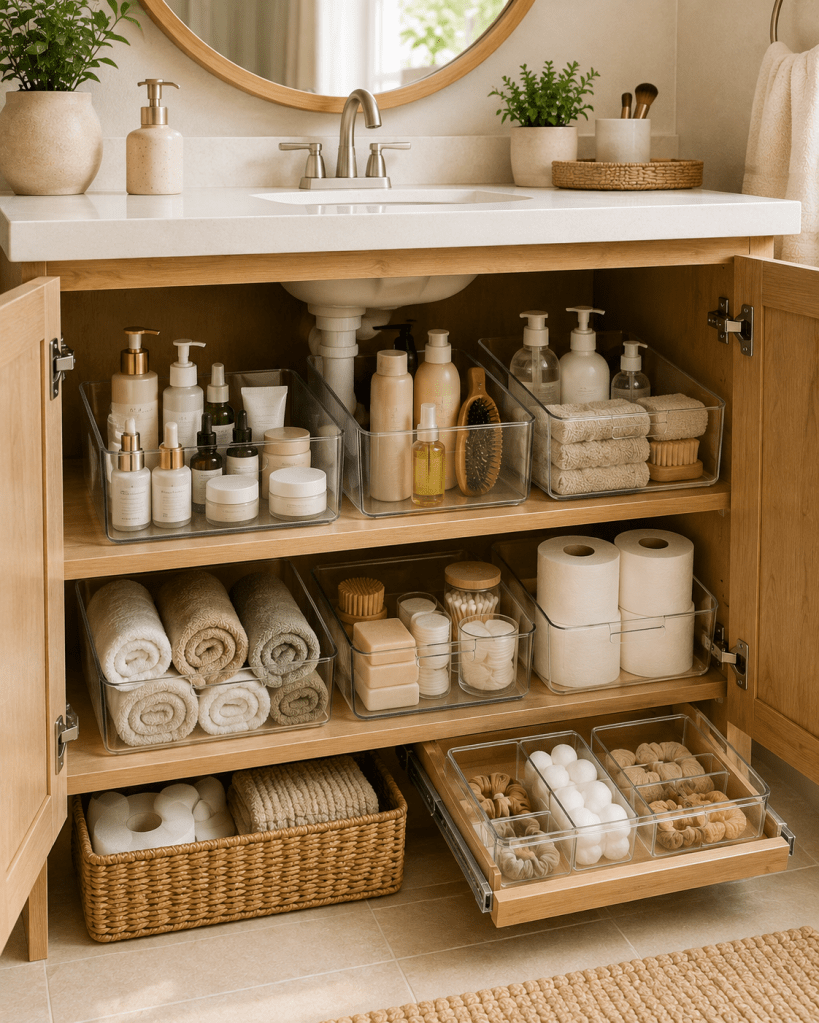
8. Organize Bathroom Essentials with Clear Storage Bins
Bathroom cabinets can quickly become cluttered with skincare, toiletries, hair products, extra soap, and other everyday essentials. Clear storage bins make it much easier to group similar products together while still allowing you to see exactly what you have.
Use separate containers for skincare, hair care, dental products, extra toiletries, and backup supplies. Smaller bins can also prevent bottles and tubes from disappearing at the back of deep cabinets.
For an even cleaner setup, keep frequently used products toward the front and less-used backups behind them.
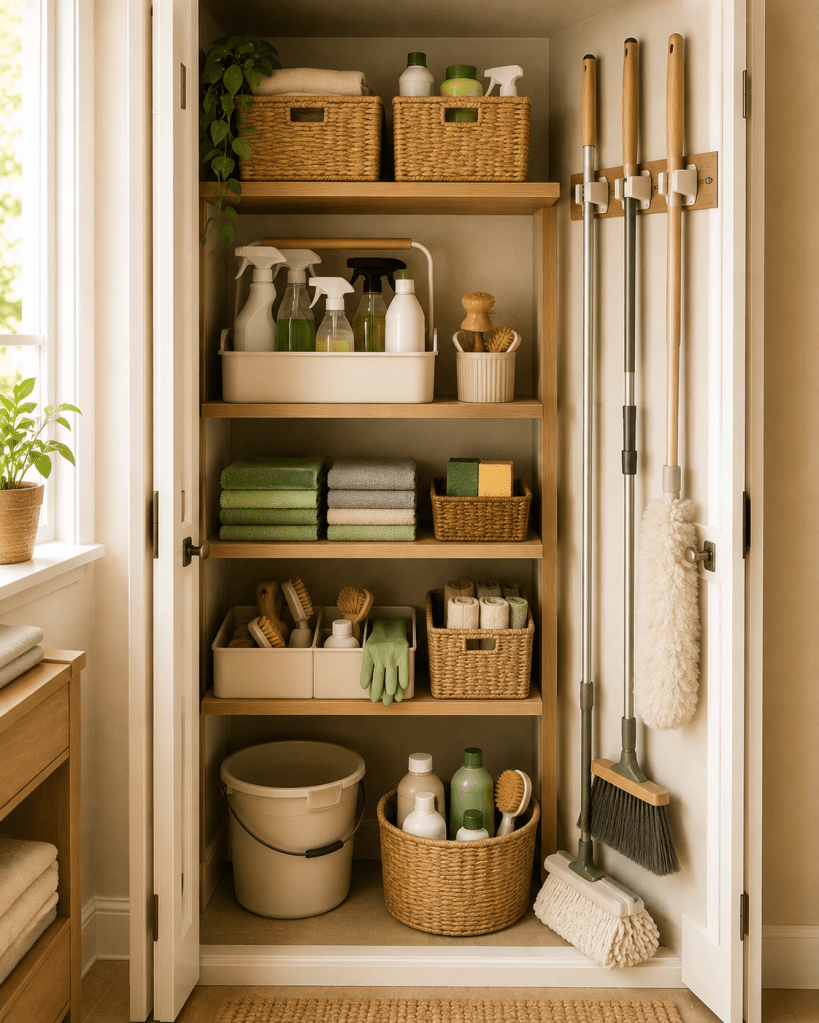
9. Create a Dedicated Cleaning-Supplies Station
Cleaning products often end up scattered under different sinks, inside random cabinets, or around the laundry room. Creating one dedicated cleaning station makes supplies easier to find and prevents you from buying products you already have.
Use a narrow utility cabinet, small shelving unit, or closet section to keep your most-used cleaning supplies together. Group similar items so you can quickly grab what you need.
A practical cleaning station can include spray bottles, microfiber cloths, brushes, sponges, gloves, dusters, and a small cleaning caddy. Keep heavier products on lower shelves and lighter items higher up.
10. Create a Family Command Center
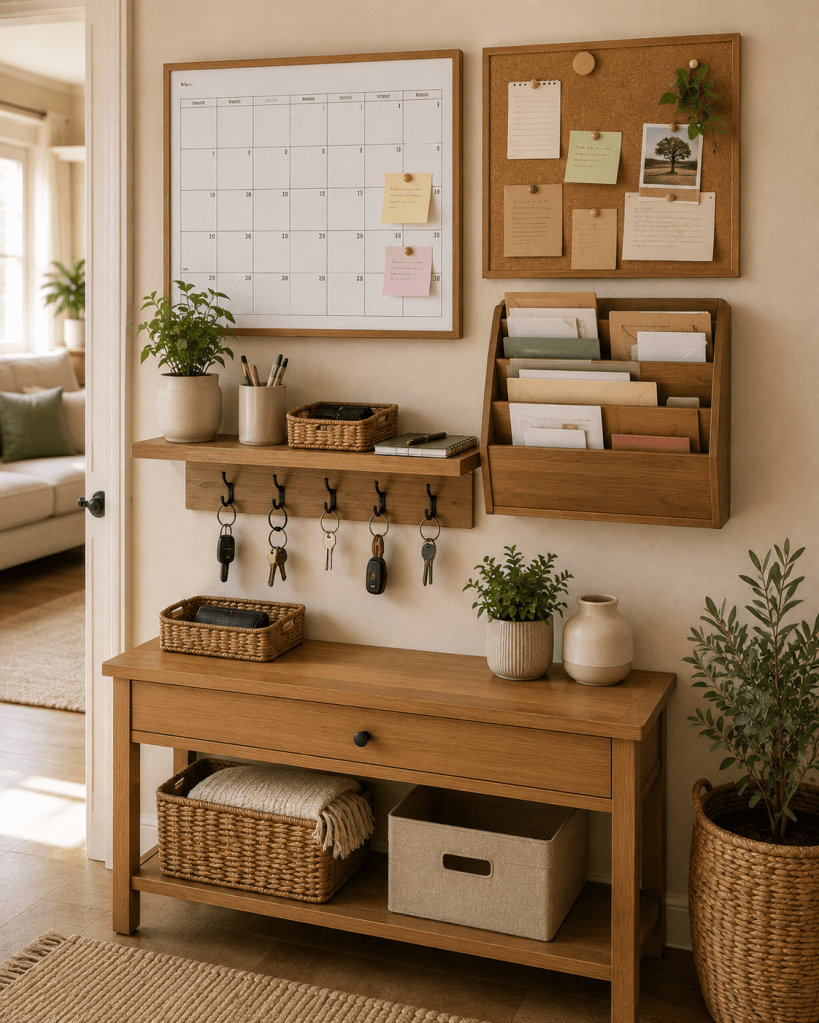
Paper clutter is one of the easiest ways for an otherwise organized home to start looking messy. Mail, bills, school papers, appointment notes, shopping lists, and keys often end up scattered across kitchen counters and tables.
A small family command center gives all of these everyday essentials one dedicated place.
Use a section of wall near the kitchen or entryway and combine a calendar, mail organizer, key hooks, small baskets, and a cork or magnetic board. Add a narrow shelf underneath for items that need to leave the house.
Even if you live alone, the same idea works beautifully as a home admin station for bills, reminders, appointments, and important paperwork.
11. Use a Storage Ottoman for Hidden Living Room Clutter
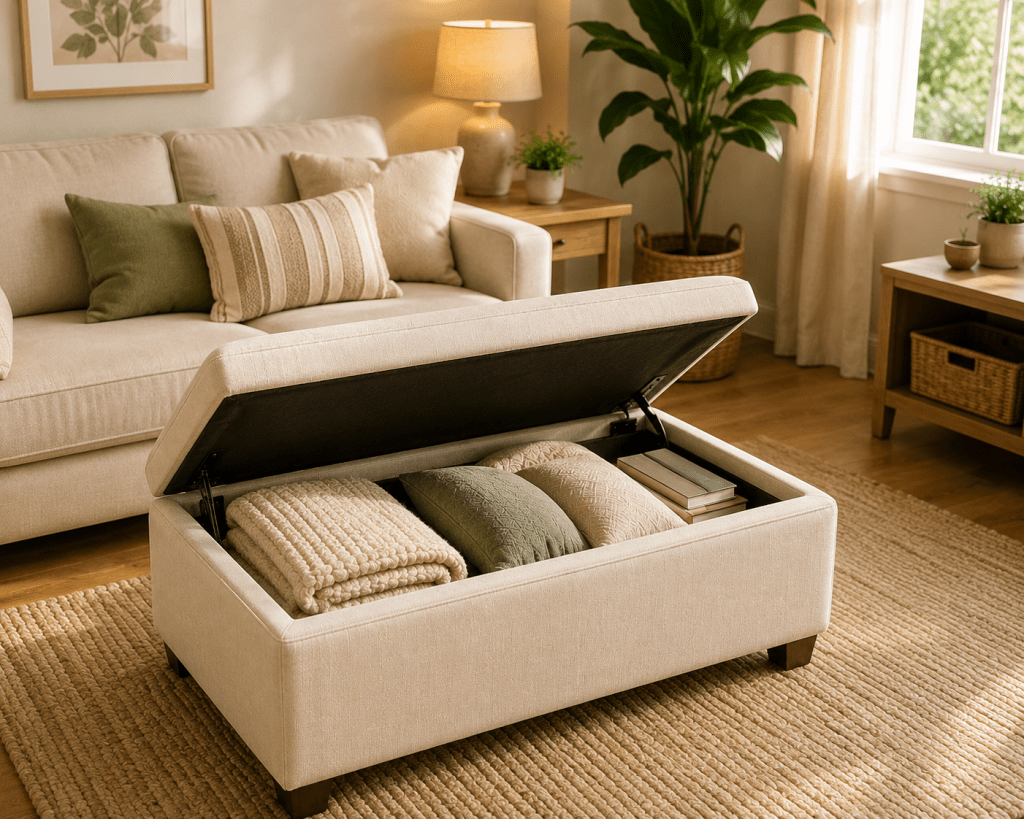
Furniture that serves more than one purpose is especially useful when you’re trying to keep a home organized without adding extra cabinets or shelves.
A storage ottoman gives you comfortable seating or a place to rest your feet while hiding items that would otherwise clutter the living room.
Use the hidden compartment for extra blankets, cushions, children’s toys, books, magazines, or occasionally used electronics. When everything is put away, the room instantly looks calmer and more spacious.
Choose an ottoman that complements your existing furniture so it feels like part of the décor rather than another storage container.
🛍️ Shop This Idea: A storage ottoman gives you extra seating and hidden storage in one stylish piece. Use it to tuck away blankets, cushions, toys, books and other everyday items while keeping your living space looking neat.
View Storage Ottomans on Amazon → https://link.amazon/B0hdFpfae
View Storage Ottomans on Amazon → https://link.amazon/B09clHIYG
12. Organize Kids’ Toys with Low Storage Bins
Toy clutter can spread across a room very quickly, especially when children don’t have an easy place to put everything away. The simplest solution is to create storage that is low, visible, and easy to reach.
Use a low shelving unit with removable bins or baskets for different types of toys. Keeping books, blocks, stuffed animals, puzzles, and art supplies in separate sections makes cleanup much easier.
The goal isn’t to hide every toy. Instead, create a simple system that children can realistically use themselves.

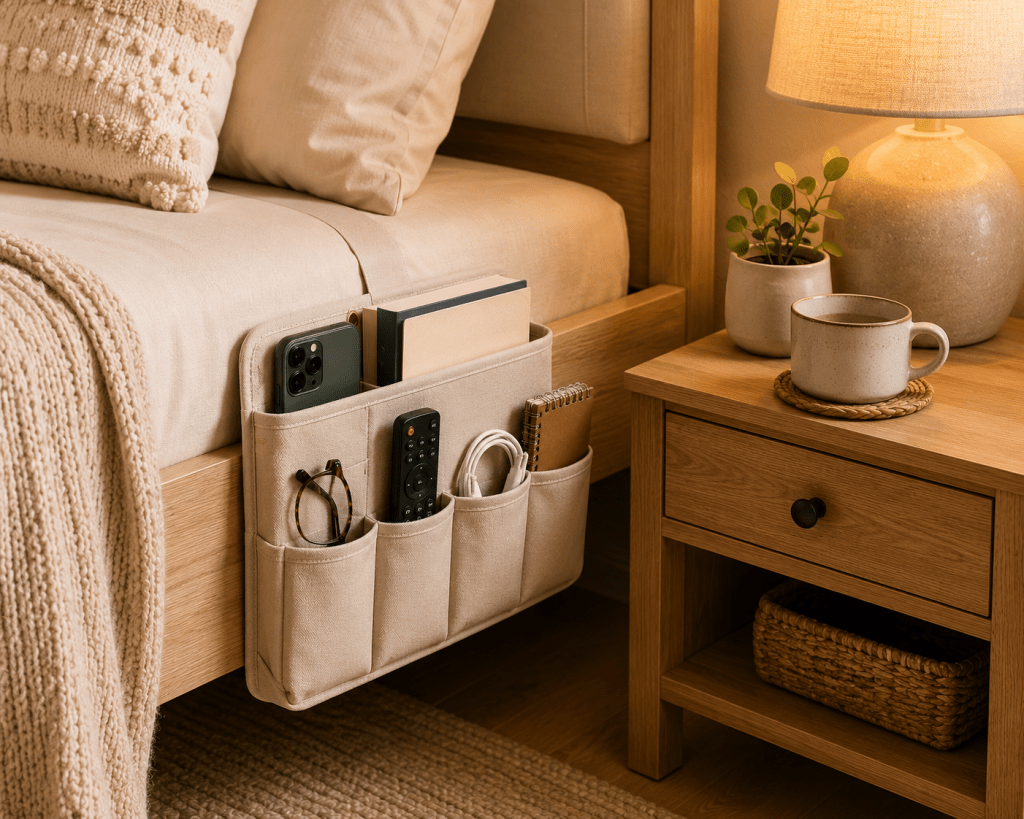
13. Use a Bedside Caddy to Control Nightstand Clutter
Nightstands easily become crowded with phones, charging cables, books, glasses, remotes, tissues, and other small items. A bedside caddy or hanging organizer keeps these essentials within reach without covering the top of your nightstand.
Choose a slim organizer that slips underneath the mattress or hangs neatly from the side of the bed. Use separate pockets for your phone, tablet, book, glasses, charging cable, and remote control.
Keep only a lamp and one or two decorative items on the nightstand. This creates a calmer bedroom while ensuring everything you need at bedtime still has a dedicated place.
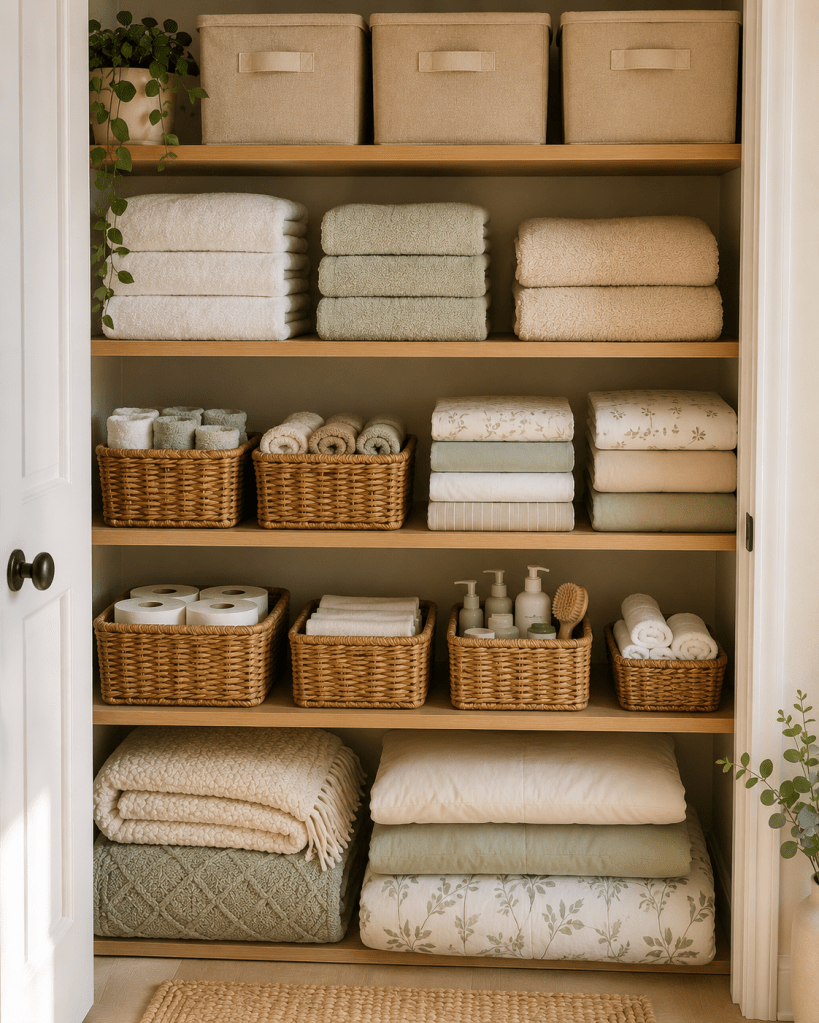
14. Create a Linen Closet with Baskets and Shelf Organizers
Linen closets can become messy surprisingly quickly when towels, sheets, pillowcases, blankets, and toiletries are stacked without a system.
Instead of creating large piles, divide the closet into small categories. Keep folded towels together, separate different bedding sets, and use baskets for smaller items such as washcloths, pillowcases, guest toiletries, and bathroom supplies.
Frequently used items should stay around eye level, while extra bedding and seasonal blankets can go on the upper or lower shelves.
A simple organization system also makes it much easier to see what you already own before buying more.
15. Create a Drop Zone for Everyday Essentials
For our final organization idea, let’s solve one of the biggest causes of everyday clutter: items that enter the house but don’t have a designated place.
Keys, handbags, sunglasses, wallets, mail, jackets, shoes, and reusable shopping bags often get dropped on tables, chairs, or countertops. Creating a simple entryway drop zone gives these items a permanent home.
Combine wall hooks with a small bench or narrow console. Add baskets underneath for shoes and bags, plus a small tray on top for keys, wallets, and other pocket essentials.
The best part is that putting things away becomes almost effortless—you can organize them as soon as you walk through the door.

Final Thoughts
An organized home doesn’t require endless storage or a perfectly minimalist lifestyle. The biggest difference often comes from giving everyday belongings a clear and convenient place to live.
Start with the areas that create the most clutter in your home. Drawer dividers can control small items, baskets can organize open shelving, under-bed containers can provide hidden storage, and wall-mounted solutions can make use of space that would otherwise be wasted.
You don’t need to implement all 15 ideas at once. Choose two or three problem areas first, create simple systems that are easy to maintain, and gradually organize the rest of your home.
The best organization system isn’t necessarily the prettiest one—it’s the one that makes your everyday routine easier.


Leave a comment