
Your entryway is the first thing you see when you walk into your home, but in a small space, it can quickly become cluttered with shoes, bags, jackets, keys, and everyday essentials.
The good news is that you don’t need a large foyer to create an entryway that’s both organized and beautiful. With smart storage, space-saving furniture, wall-mounted solutions, and a few thoughtful decorative touches, even the smallest entrance can feel welcoming and functional.
These 15 small entryway ideas will help you reduce clutter, maximize every inch, and create a stylish first impression without overwhelming your space.
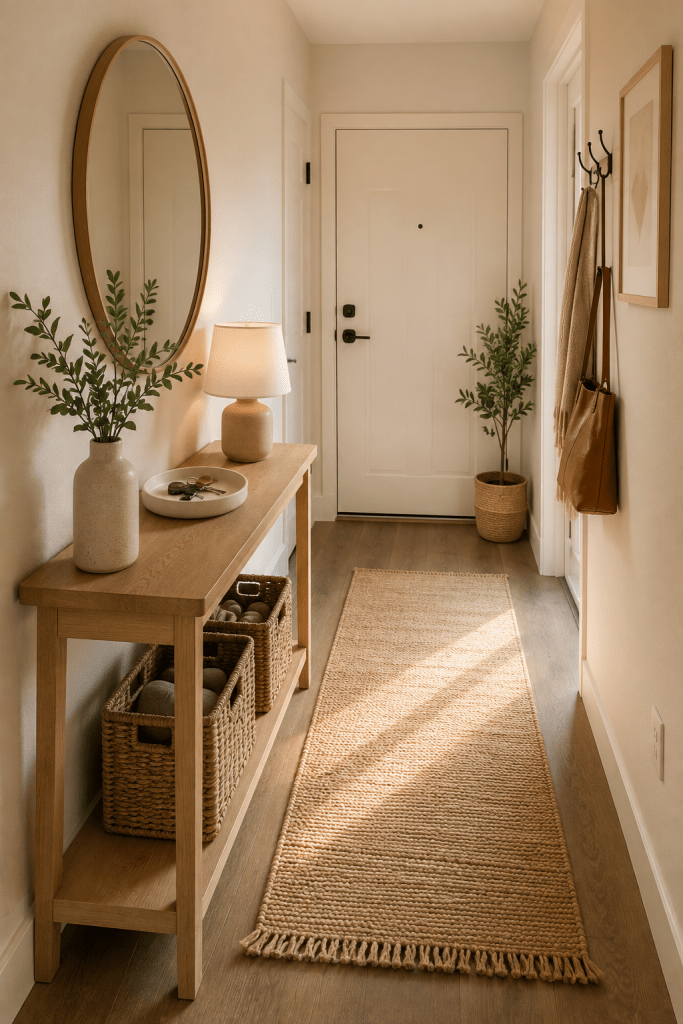
1. Choose a Slim Console Table
A bulky console can make a narrow entryway difficult to walk through. Instead, choose a slim console table that provides a useful surface while taking up very little floor space.
Use the top for a small catch-all tray, keys, a lamp, or a simple vase. If the console has a lower shelf, add one or two baskets underneath to hide smaller everyday items.
Keeping the styling minimal will make the entrance feel more spacious while still giving you a practical place to drop essentials when you come home.
🛍️ Shop This Idea: A slim console table gives a small entryway a practical drop zone without taking up too much walking space. Use it for keys, a catch-all tray, a small lamp or décor, and choose a design with lower storage for even more functionality.
View Slim Console Tables on Amazon →https://link.amazon/B0g9JDqyB
2. Add a Storage Bench for Seating + Hidden Storage
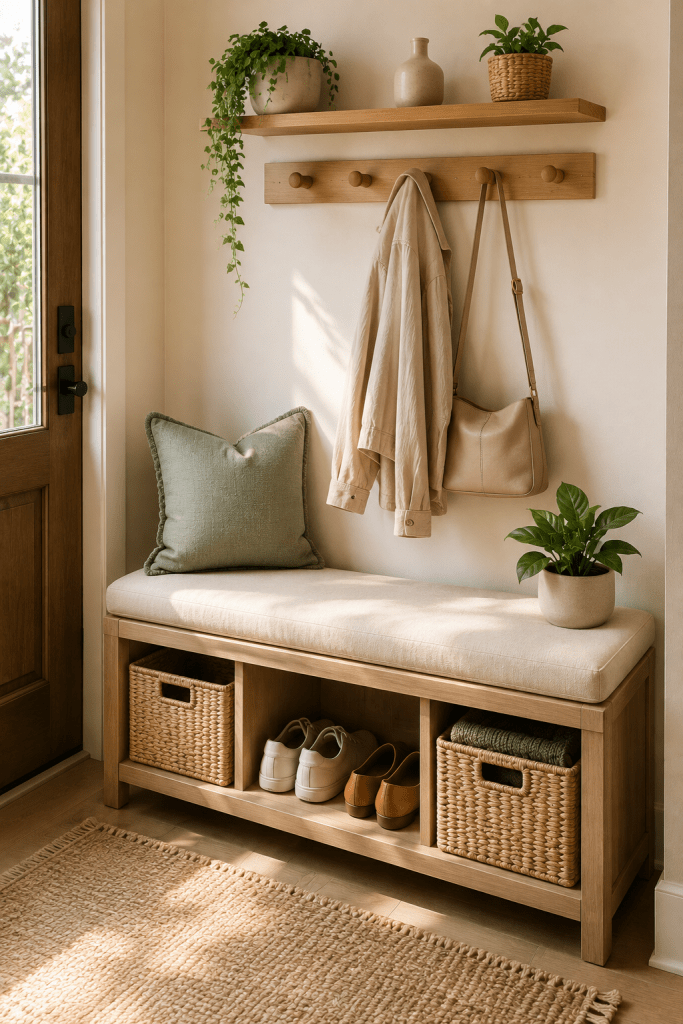
A small entryway needs furniture that works harder without taking up unnecessary space. A compact storage bench gives you somewhere comfortable to sit while putting on shoes and provides valuable storage at the same time.
Choose a narrow bench with cubbies, drawers, or open space underneath. Add woven baskets to store shoes, scarves, reusable bags, umbrellas, or other everyday essentials while keeping visual clutter under control.
A simple cushion on top can make the bench feel warm and inviting without overcrowding the entrance.
🛍️ Shop This Idea: Make a small entryway work harder with a compact storage bench. It gives you a convenient place to sit while putting on shoes while providing extra space underneath for footwear, bags and everyday essentials.
View Entryway Storage Benches on Amazon → https://link.amazon/B0dkgRj9t
3. Use Wall Hooks to Free Up Floor Space
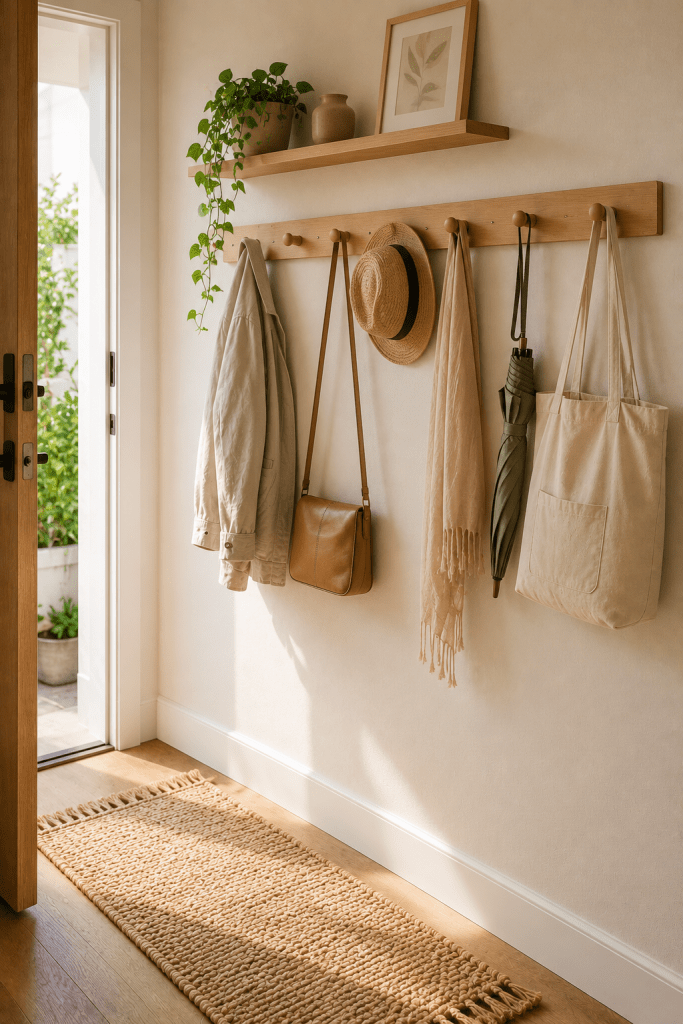
When an entryway is tiny, every inch of floor space matters. Instead of adding a standing coat rack, use wall-mounted hooks or a wooden peg rail to take advantage of vertical space.
Hooks are perfect for keeping everyday jackets, handbags, hats, scarves, umbrellas and reusable shopping bags within easy reach.
The trick is not to overload them. Keep only the items you use regularly near the door and store everything else inside a closet. This keeps your entryway functional without making the wall look cluttered.
4. Add a Large Mirror to Make the Entryway Feel Bigger
A mirror is one of the simplest tricks for making a small or narrow entryway feel brighter and more spacious. It reflects natural and artificial light around the space while adding depth to an otherwise tight hallway.
Instead of using several small decorations, try one generously sized mirror as the focal point. A round, arched, or tall rectangular mirror can make a beautiful statement without using any valuable floor space.
Position it where it can reflect light from a nearby doorway or window for the biggest visual impact.

5. Choose a Slim Shoe Cabinet for a Clutter-Free Floor
Shoes are often the biggest source of clutter near the front door. In a small entryway, an ordinary shoe rack can also take up valuable walking space.
A slim tilt-out shoe cabinet is a smarter solution because it stores several pairs vertically while staying close to the wall.
Keep everyday shoes inside the cabinet and leave the floor mostly clear. The top can double as a small surface for a key tray, vase or decorative bowl, eliminating the need for another piece of furniture.
For an especially narrow hallway, look for a cabinet with a shallow depth so doors and walkways remain unobstructed.

6. Add Floating Shelves Above Empty Wall Space
In a tiny entryway, you don’t always have room for another cabinet or table. That’s where floating shelves can make a big difference.
Installing one or two shelves above an unused section of wall gives you extra storage without sacrificing valuable floor space. Use them for small baskets, keys, sunglasses, mail, decorative pieces or other everyday essentials.
Keep the arrangement simple. A combination of practical storage and a little décor prevents the shelves from looking overcrowded.
For especially small entrances, pair the shelves with a few hooks underneath to create a compact all-in-one entryway organizer.

7. Use a Narrow Runner Rug to Define the Entryway
Even when you don’t have a separate foyer, a runner rug can visually create one.
A narrow runner helps define the entrance, adds warmth and texture, and protects the floor in a high-traffic area. It’s especially useful in long, narrow hallways where adding more furniture could make the space feel cramped.
Choose a rug that fits comfortably within the walkway without touching the walls. Low-pile or washable runners are practical choices for an entryway because they’re easier to maintain when shoes bring in dust or dirt.
A subtle pattern can also add personality without making a small space feel busy.

8. Create a Mini Drop Zone for Keys, Mail & Everyday Essentials
One reason entryways become cluttered so quickly is that small everyday items have nowhere specific to go. Keys land on countertops, sunglasses disappear into bags, and unopened mail starts piling up.
Even a tiny entrance can have a dedicated drop zone without needing a full console table.
Install a compact wall-mounted organizer with a small shelf or mail pocket and hooks underneath. Add a catch-all tray for keys, sunglasses and wallets, while keeping incoming mail together in one designated spot.
The result is a simple habit: when you walk through the door, everything immediately has a home.
🛍️ Shop This Idea: Keep everyday essentials from piling up with a wall-mounted key and mail organizer. Hooks provide a dedicated spot for keys while the shelf or compartment keeps letters, sunglasses and other grab-and-go items neatly together.
View Key & Mail Organizers on Amazon → https://link.amazon/B06erPdNl

9. Add a Corner Shelf to Use an Awkward Entryway Corner
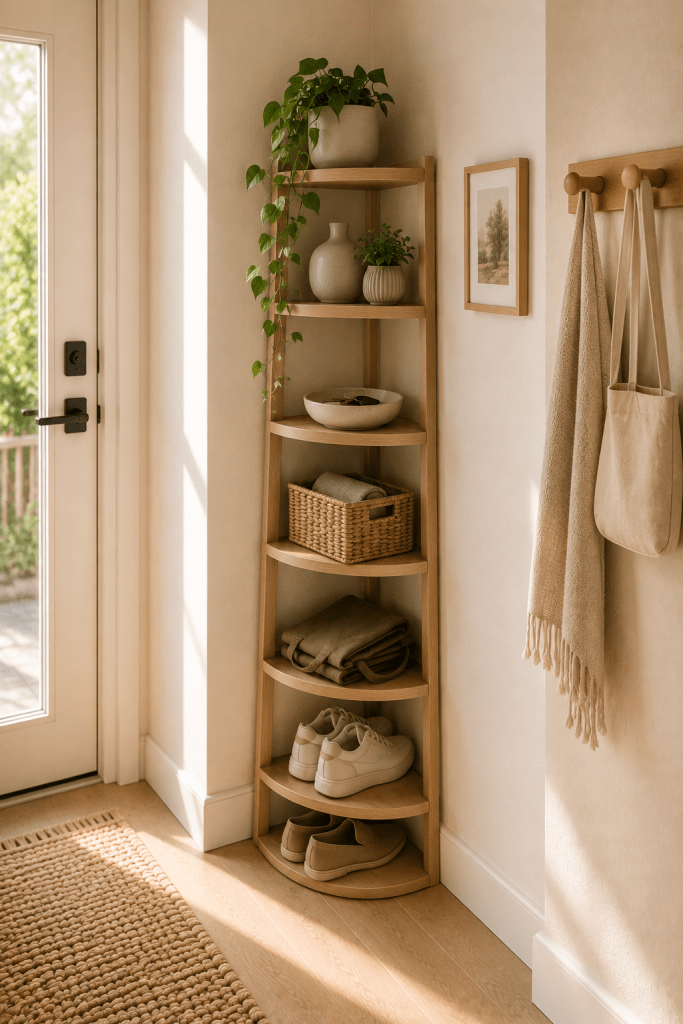
Small entryways often have an awkward corner that seems too narrow for a console table or cabinet. Instead of leaving it unused, turn it into functional storage with a compact corner shelving unit.
A tall, narrow corner shelf uses vertical space while taking up very little floor area. Use the lower shelves for practical items like shoes, baskets or reusable bags, and reserve the upper shelves for keys, small accessories and a little décor.
Keeping the shelf narrow and lightly styled prevents the corner from feeling crowded.
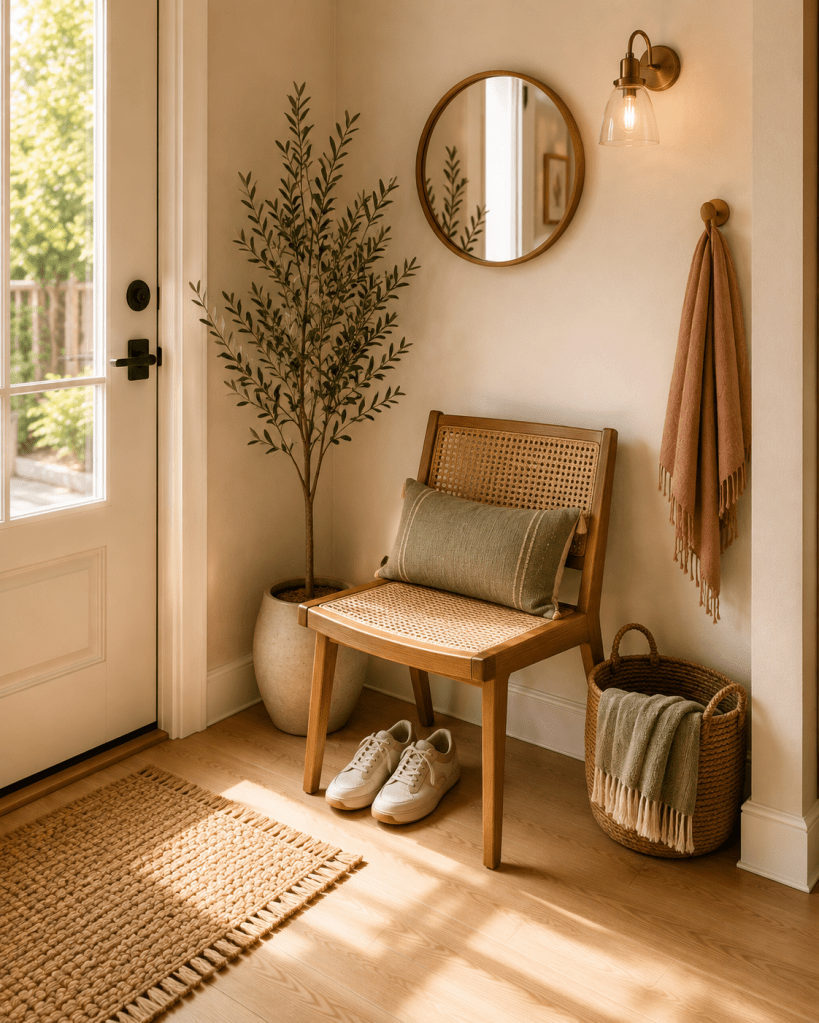
10.Add a Small Accent Chair to an Empty Entryway Corner
If your entryway has a tiny unused corner, a compact accent chair can make the space feel welcoming while providing a practical spot to sit when putting on or removing shoes.
Choose a chair with a slim frame so it doesn’t block the walkway. A small basket beside it can hold slippers, umbrellas, or reusable bags, while a tiny wall hook above keeps one everyday item within reach.
11. Add an Umbrella Stand Without Cluttering the Entryway
Umbrellas are easy to forget about when planning an entryway, but on rainy days they often end up leaning against the wall or dripping onto the floor.
A slim umbrella stand gives wet and dry umbrellas a dedicated place while taking up very little space. Choose a narrow design that can fit beside the front door or into an unused corner.
For a softer, more decorative look, you can use a tall woven basket for dry umbrellas. For wet umbrellas, however, choose a waterproof stand with a removable drip tray so moisture doesn’t damage the flooring.
Keeping umbrellas close to the door also means they’re easy to grab whenever you’re heading outside.
🛍️ Shop This Idea: Keep umbrellas tidy and easy to grab with a slim umbrella stand. Its compact footprint makes it especially useful in small entryways while preventing wet umbrellas from cluttering the floor.
View Slim Umbrella Stands on Amazon → https://link.amazon/B06M4DiQ8

12. Add a Wall-Mounted Fold-Down Seat
Now let’s do something genuinely different again. 😄
In an extremely small entryway, there may not be enough room to keep a bench or chair permanently. A wall-mounted fold-down seat gives you somewhere to sit while putting on shoes and then folds flat against the wall when you’re finished.
It’s an especially clever solution for tiny apartments, narrow hallways and compact foyers because the walkway remains completely open when the seat isn’t being used.
Choose a simple wood design that blends with the wall and make sure it’s properly secured for safe everyday use.

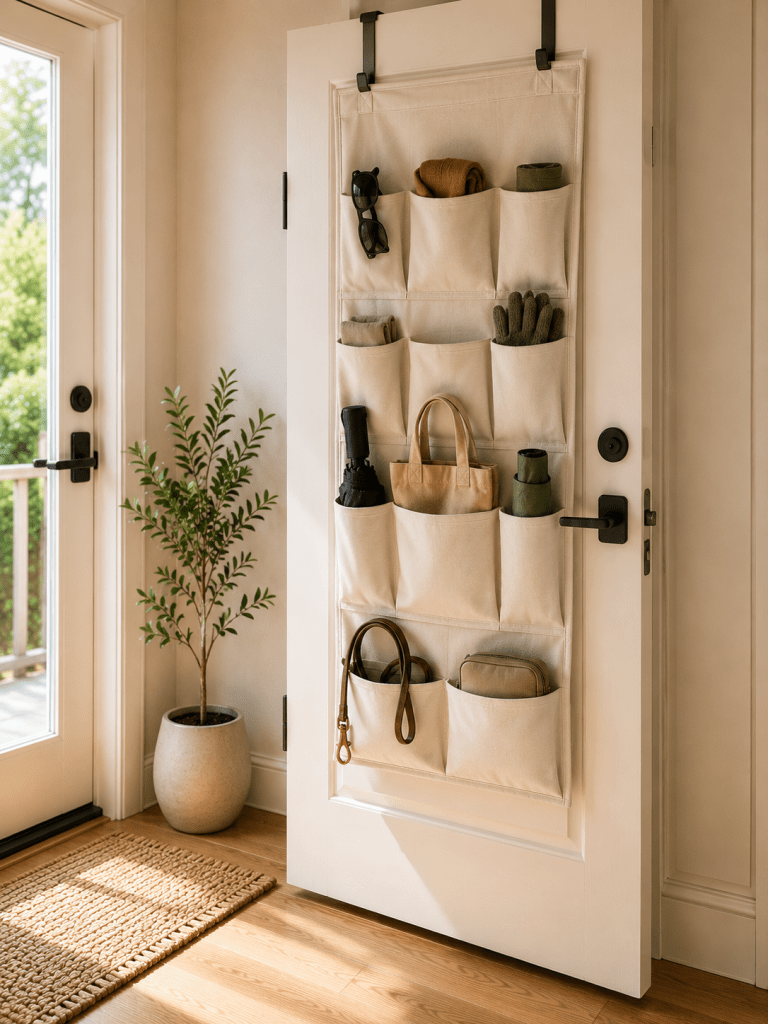
13. Use the Back of the Front Door for Hidden Storage
In a very small entryway, even the back of the front door can become useful storage space.
Instead of adding another piece of furniture, use a slim over-the-door organizer for lightweight everyday essentials. Depending on your needs, the pockets can hold scarves, gloves, reusable shopping bags, dog-walking accessories, sunglasses or other grab-and-go items.
Choose a streamlined organizer that sits flat against the door so it doesn’t interfere with opening and closing.
This is especially useful for apartments where there is almost zero spare floor space.
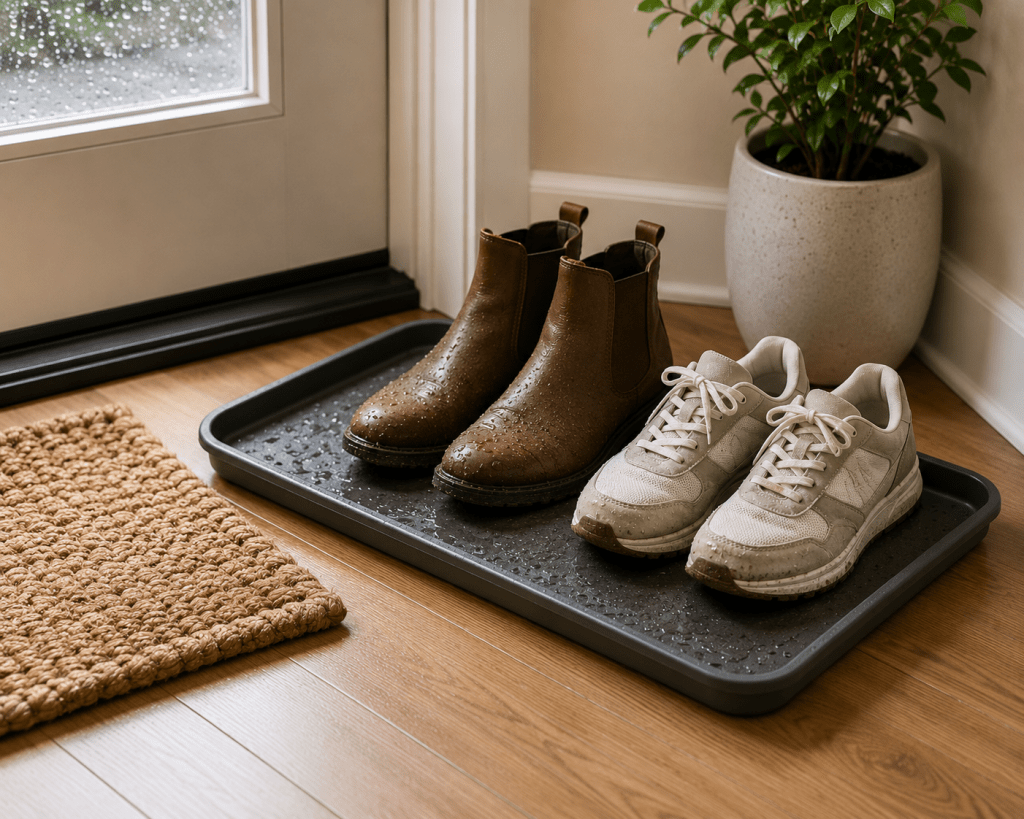
14. Add a Boot Tray to Keep Floors Clean
Shoes brought in from outside can quickly make a small entryway messy, especially during rainy or muddy weather. A compact boot tray gives wet or dirty footwear a dedicated place without requiring a large shoe rack.
Place a slim waterproof tray directly beside the front door and use it for the shoes your household wears most often. A tray with a raised edge helps contain water, mud and dirt, protecting the surrounding flooring.
For an attractive look, choose a simple tray in a neutral finish and avoid overcrowding it with too many pairs.
🛍️ Shop This Idea: Keep wet or muddy shoes from making a mess with a waterproof boot tray. Raised edges help contain water and dirt while giving everyday footwear a neat, dedicated spot near the entrance.
View Boot & Shoe Trays on Amazon → https://link.amazon/B0cF1pxWg
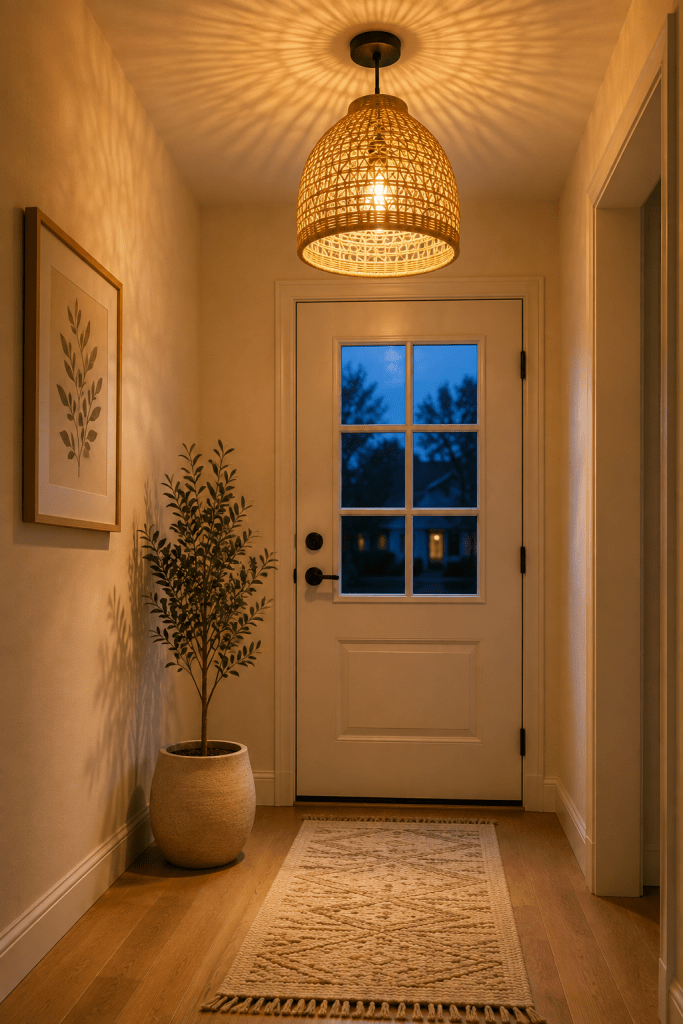
15. Add a Statement Light to Brighten a Small Entryway
A small entryway doesn’t always need more storage. Sometimes the best improvement is simply making the space feel brighter, warmer, and more welcoming.
Replace a basic ceiling fixture with a compact statement pendant or flush-mount light. Good lighting can make a narrow entrance feel more open while adding personality without taking up a single inch of floor space.
For a small entryway, choose a fixture that is proportional to the space. Woven rattan, frosted glass, or warm metal finishes can add texture while keeping the overall look light and airy.
Pair it with a warm-toned bulb to create an inviting glow when you arrive home in the evening.
Final Thoughts
A small entryway doesn’t have to feel cramped, cluttered, or forgotten. With a few thoughtful choices, even the tiniest entrance can become a stylish and practical part of your home.
The key is to make every inch work harder. Slim furniture can provide storage without blocking the walkway, mirrors can make narrow spaces feel larger, wall-mounted solutions can free up valuable floor space, and simple additions like runner rugs, boot trays, lighting, and baskets can make everyday routines easier.
You don’t need to use all 15 ideas at once. Start by identifying your biggest entryway problem—whether that’s shoes, coats, keys, limited seating, or simply a lack of personality—and choose the solution that works best for your space.
Most importantly, keep your entryway simple, functional, and welcoming. After all, it’s the first space you see when you come home and the first impression guests get when they walk through your door.


Leave a comment