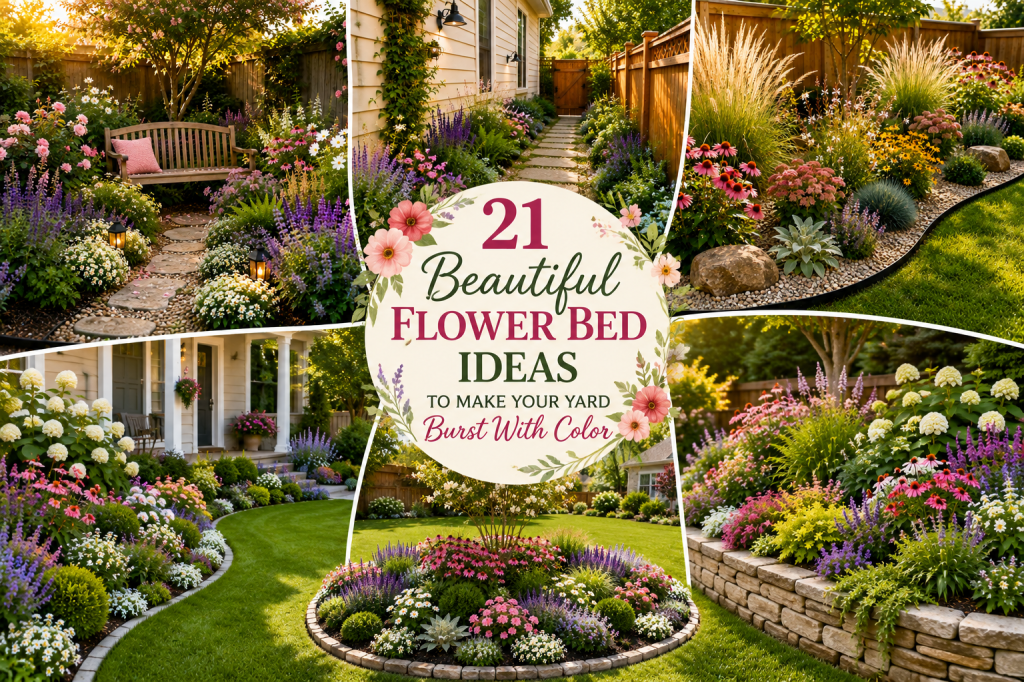
A beautiful flower bed can completely change the way a yard feels. Even a simple patch of lawn can become more inviting when it’s surrounded by layers of colorful flowers and greenery.
The best flower beds aren’t necessarily the biggest or most complicated. Thoughtful plant combinations, varied heights, repeating colors, and defined edges can create a polished look even in a relatively small space.
You can create romantic cottage-style borders, modern structured beds, pollinator-friendly gardens, colorful beds around trees, or simple arrangements along fences and pathways.
Before planting, pay attention to how much sunlight the area receives and choose plants suited to your climate and growing conditions. It’s also worth considering mature plant sizes so smaller flowers don’t eventually disappear behind larger ones.
In the ideas below, we’ll explore 21 beautiful flower bed designs that can inspire everything from a small weekend garden refresh to a complete backyard transformation. 🌸🌿
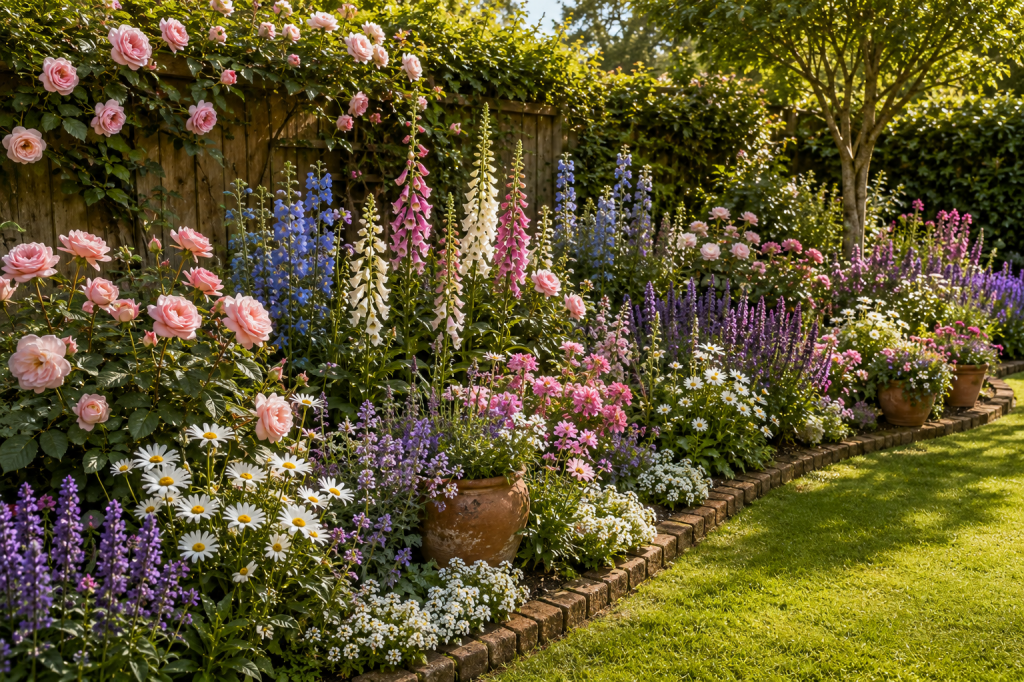
🌸 1. Create a Romantic Cottage Flower Border
Cottage-style flower beds are perfect if you love a garden that feels lush, relaxed, and slightly wild.
Instead of planting flowers in perfectly straight rows, arrange them in loose groups and allow some varieties to gently overlap. This creates the established, abundant look associated with traditional cottage gardens.
Use taller flowers toward the back, medium-height plants through the center, and lower-growing varieties along the front edge.
Repeating several plants throughout the border will help tie everything together while still allowing the garden to feel informal.
For a soft romantic palette, combine pink, lavender, white, and pale blue.
💜 2. Plant a Lavender-Lined Flower Bed
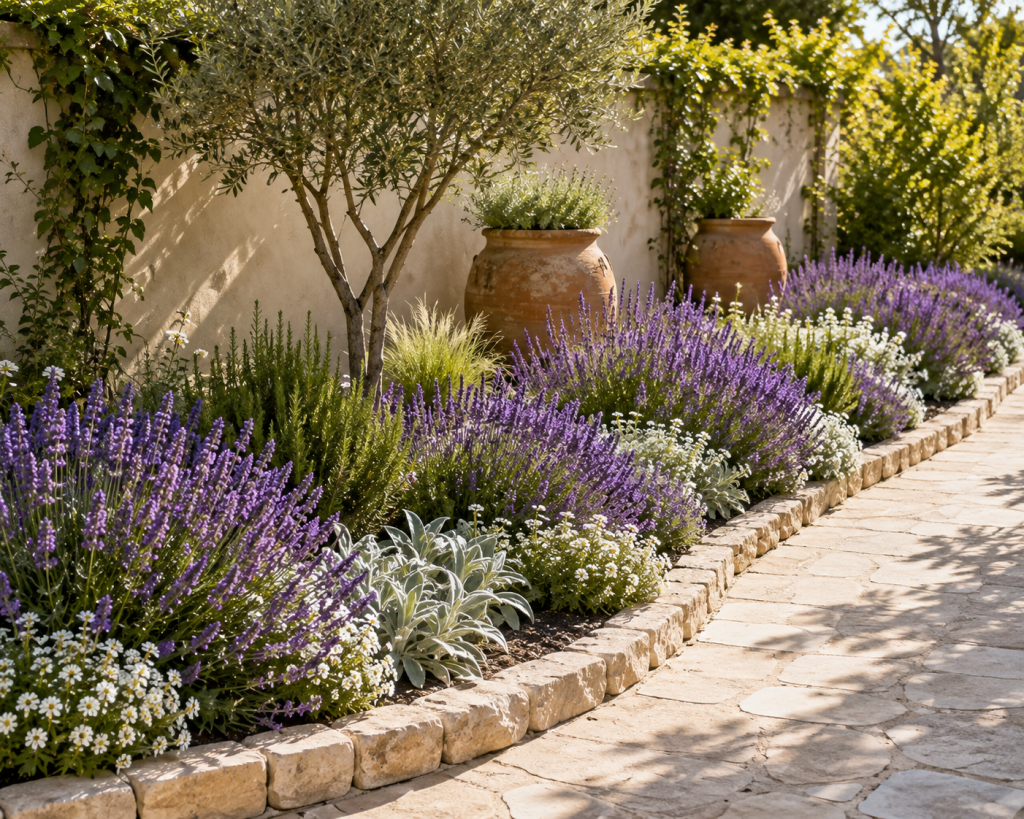
A lavender-focused flower bed is a beautiful way to add color, fragrance, and structure to a sunny garden.
Instead of mixing many different flowers, use lavender repeatedly throughout the bed to create a calm, cohesive look. Its soft purple flowers pair beautifully with silvery foliage and warm natural stone.
Lavender generally prefers plenty of sunlight and well-drained soil, so choose a location that suits the variety you’re growing. Avoid overcrowding the plants, as good airflow can help them stay healthy.
For additional texture, combine lavender with a few drought-tolerant companion plants rather than turning the bed into a heavily mixed cottage border.
🤍 3. Create an Elegant White Flower Bed
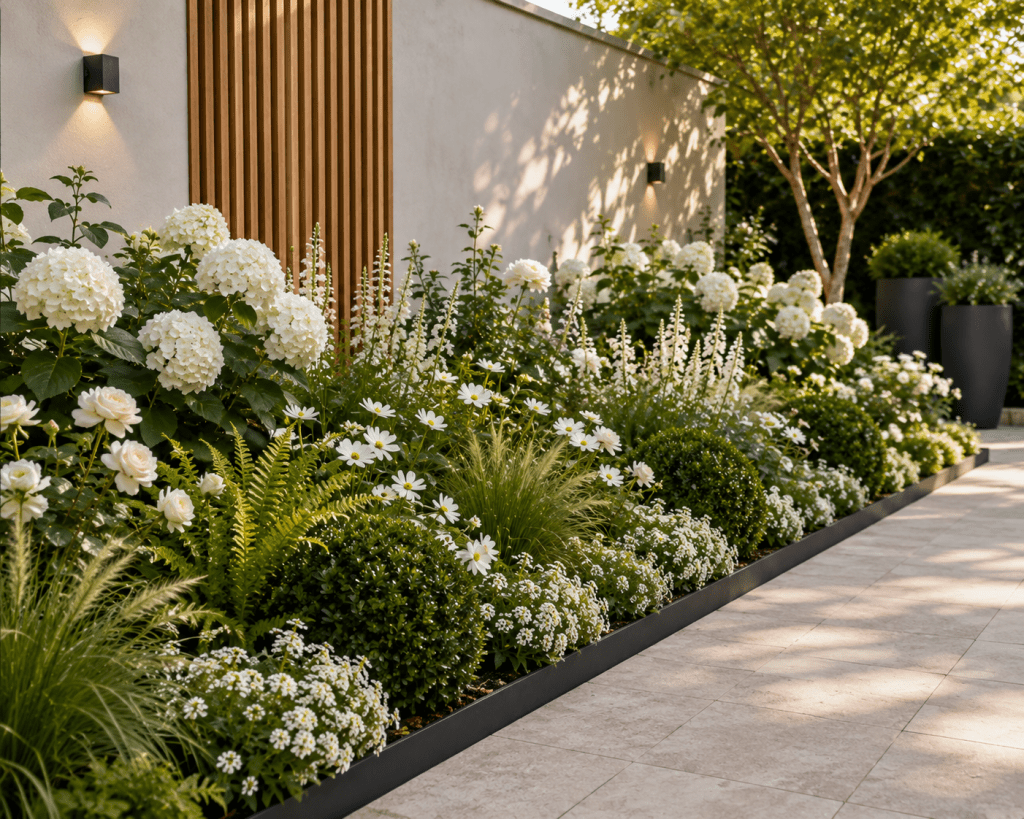
A white flower bed can make a garden feel calm, fresh, and sophisticated while still providing plenty of visual interest.
The secret is to rely on different flower shapes, plant heights, and foliage textures rather than color alone. Large hydrangea blooms can provide structure, while smaller flowers soften the edges.
White flowers can also look particularly beautiful during the evening because their pale blooms remain visible as daylight begins to fade.
Use plenty of greenery between flowering plants so the white blooms stand out rather than blending together.
🌻 4. Grow a Pollinator-Friendly Flower Bed
A pollinator-friendly flower bed can bring color and movement into your garden while providing useful food sources for bees, butterflies, and other beneficial insects.
Rather than relying on a single flower variety, choose several nectar- and pollen-rich plants that bloom at different points during the growing season. This can help provide a longer-lasting food source.
Planting flowers in generous groups can make them easier for pollinators to find. Include different flower shapes and heights to attract a wider variety of visitors.
Whenever possible, choose plants native or well suited to your local area, since these are often particularly valuable to local wildlife and easier to maintain.
Avoid using pesticides indiscriminately, especially while plants are flowering.

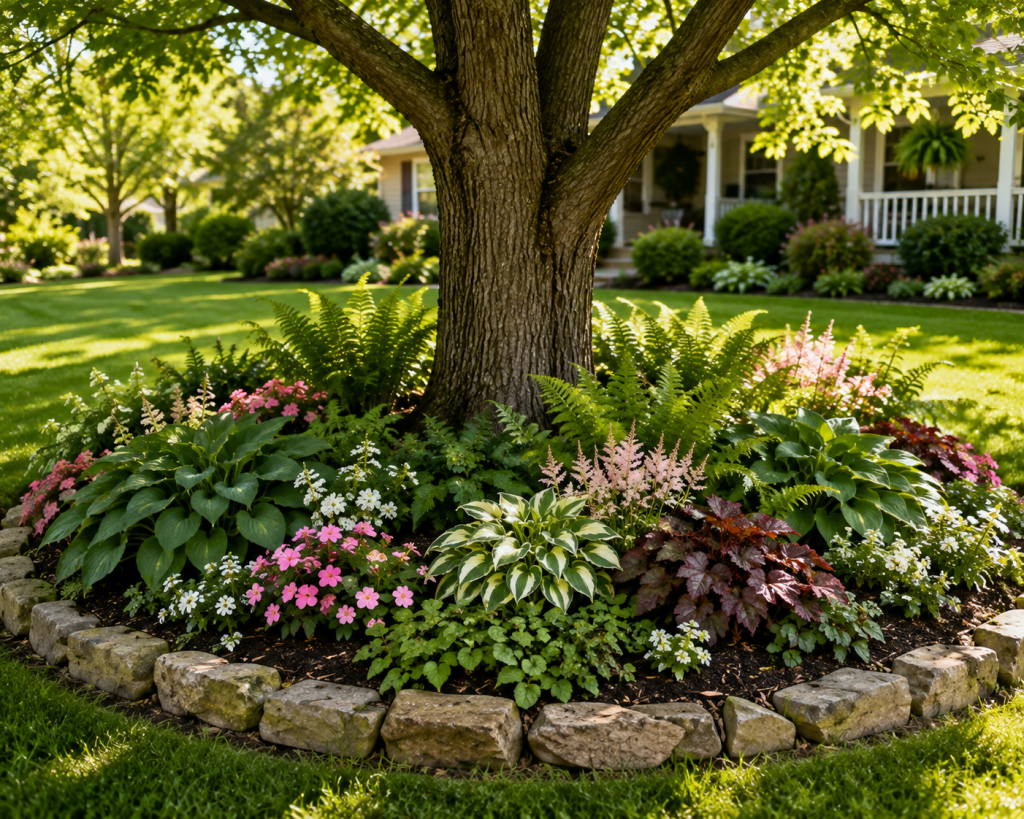
🌳 5. Create a Flower Bed Around a Tree
The space around a mature tree can become a beautiful focal point when planted thoughtfully.
Instead of leaving a plain circle of grass around the trunk, create a generously sized curved bed that visually connects the tree with the surrounding landscape.
When planting around an established tree, avoid piling soil or mulch against the trunk and take care not to damage major roots. Choose plants suited to the amount of light beneath the canopy.
For areas with filtered shade, foliage plants combined with shade-tolerant flowers can create plenty of interest without relying on constant blooms.
Keep the design relatively simple so the tree remains the main feature.
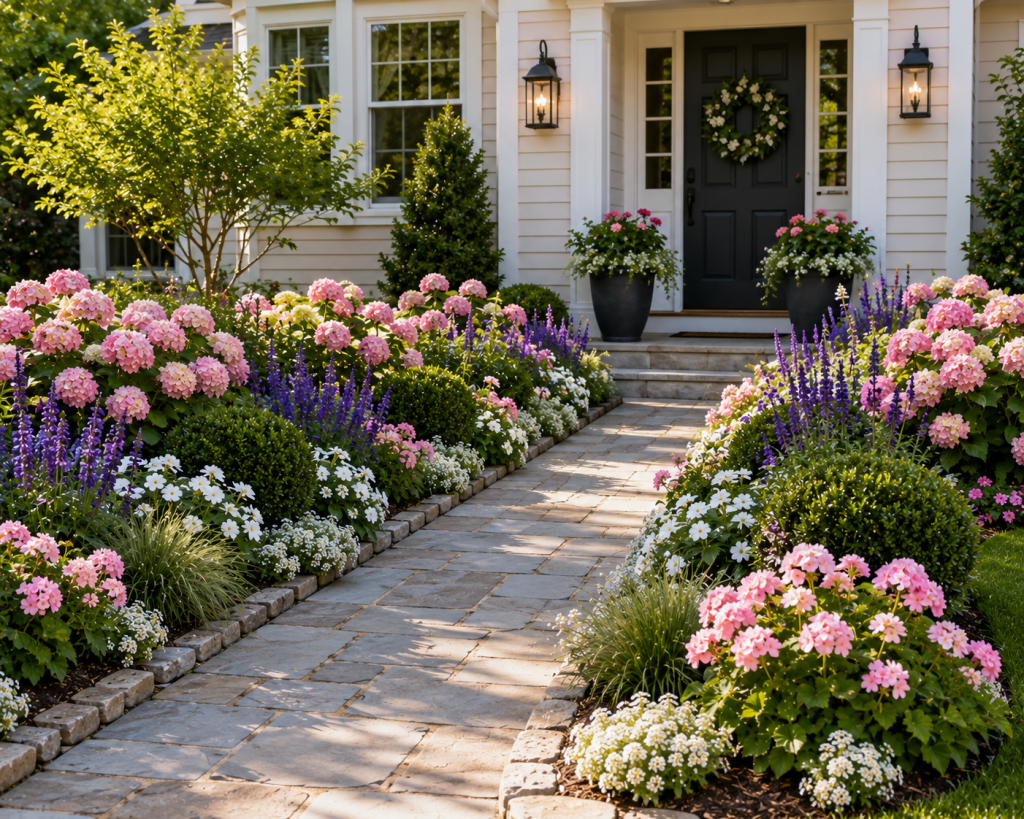
🏡 6. Create a Colorful Flower Bed Along the Front Walkway
A flower bed beside the path leading to your front door can make the entrance feel much more welcoming.
For a polished look, repeat several plant varieties along the length of the bed rather than using a completely different flower every few feet. Repetition helps guide the eye toward the entrance and makes even colorful planting feel organized.
Place taller shrubs and flowers closer to the house, medium-height plants through the middle, and compact flowers along the pathway edge.
Choose plants that won’t eventually grow across the walkway, and leave enough space between young plants for their mature size.
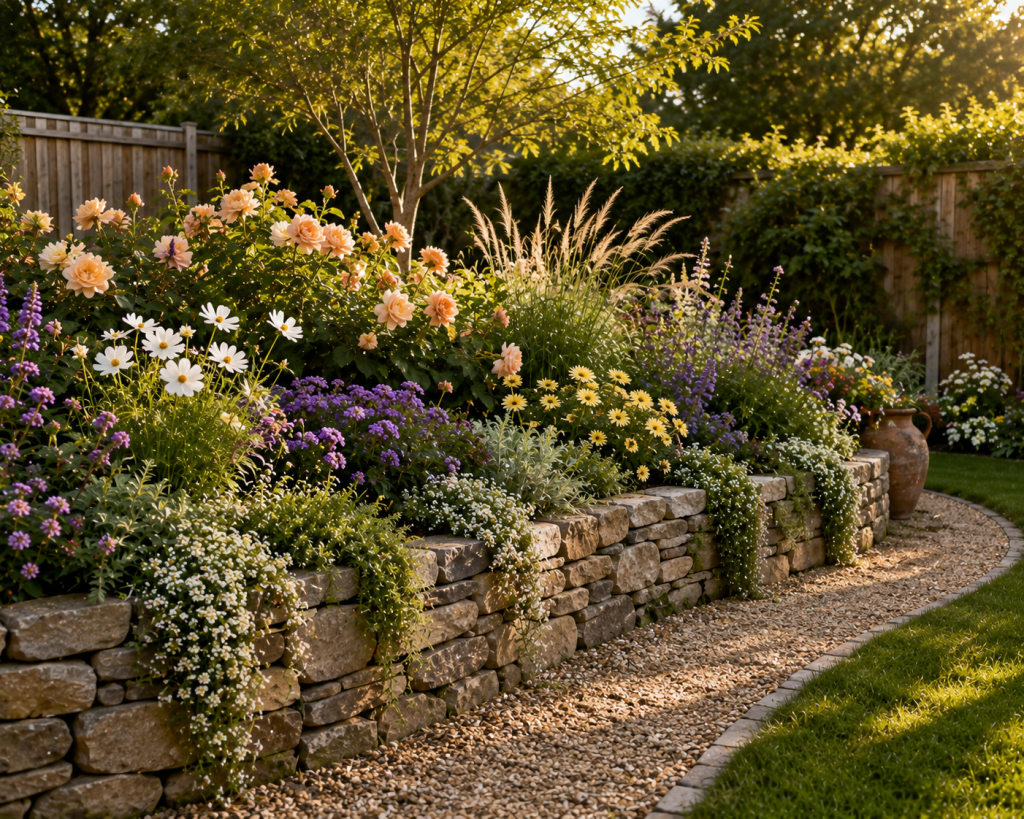
🪨 7. Build a Raised Stone Flower Bed
A raised flower bed can add height and definition to a garden while creating a clear separation between planting areas and surrounding paths or lawns.
Natural stone works especially well when you want the bed to feel established and integrated into the landscape.
Use taller plants toward the center or back of the bed and allow smaller flowers and trailing plants to soften the stone edges.
Before building, consider drainage and the mature size of the plants you intend to grow. A raised bed filled too densely can quickly become overcrowded.
For a relaxed look, combine flowering perennials with foliage plants and let a few low-growing varieties gently spill over the wall.
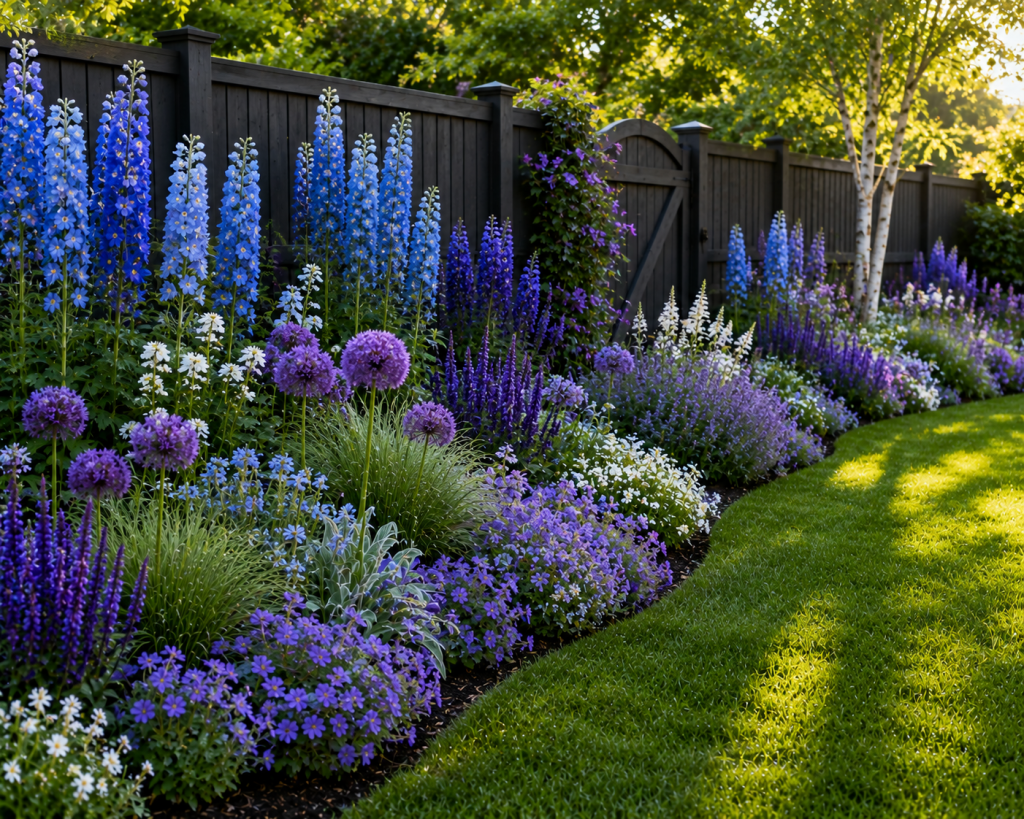
💙 8. Plant a Blue & Purple Fence-Line Flower Bed
A flower bed running along a fence can soften a hard boundary and make the entire garden feel more established.
Instead of hiding the fence with one solid hedge, layer flowering plants of different heights in front of it. Taller flowers toward the back create height, while medium and low-growing plants fill the foreground.
Using a limited palette—such as blue, violet, lavender, and white—can make an abundant border feel coordinated rather than chaotic.
Repeating the same plants several times along a long bed also creates rhythm and helps visually connect one end of the garden to the other.
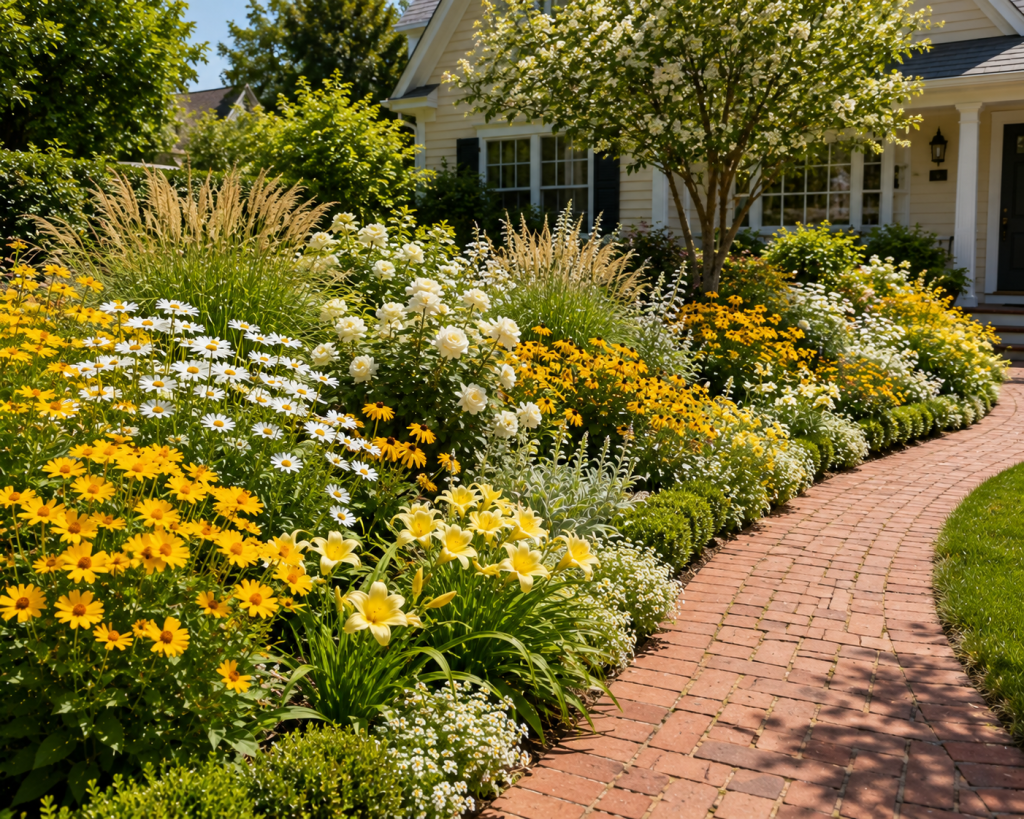
🌼 9. Design a Sunny Yellow & White Flower Bed
Yellow flowers instantly brighten a garden and pair beautifully with crisp white blooms for a fresh, timeless look. This combination feels sunny without becoming overwhelming.
Instead of scattering yellow everywhere, repeat a few varieties throughout the bed and let white flowers create visual breaks. Adding ornamental grasses helps soften the brighter colors.
Choose a sunny location where flowering perennials can bloom abundantly, and keep taller flowers toward the back for a layered display.
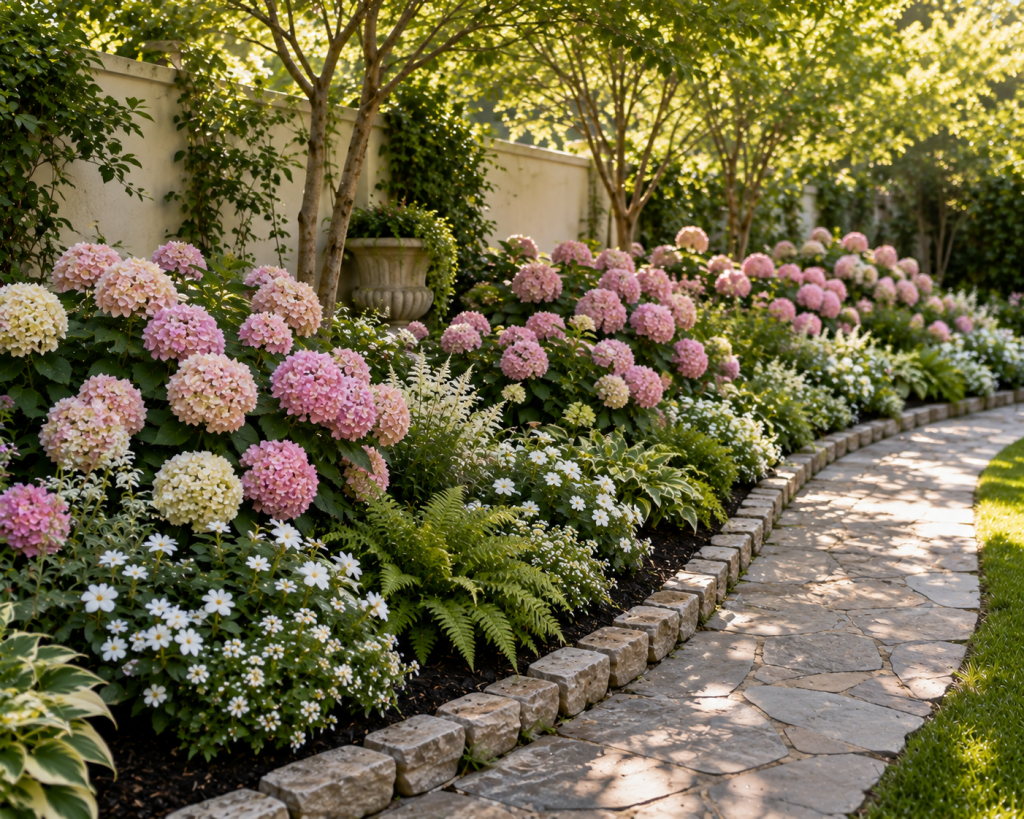
🌸 10. Create a Hydrangea-Filled Flower Bed
Hydrangeas can create an impressive flower bed because their large blooms provide plenty of color and visual impact without requiring dozens of different flowering plants.
For a cohesive look, plant several hydrangeas in repeating groups and surround them with lower-growing foliage and complementary flowers.
Depending on the hydrangea variety and your climate, light requirements can range from more sun to partial shade, so choose a location suited to the plants you select.
Allow enough room for mature growth. Small nursery plants can eventually become substantial shrubs, and overcrowding can make maintenance difficult.
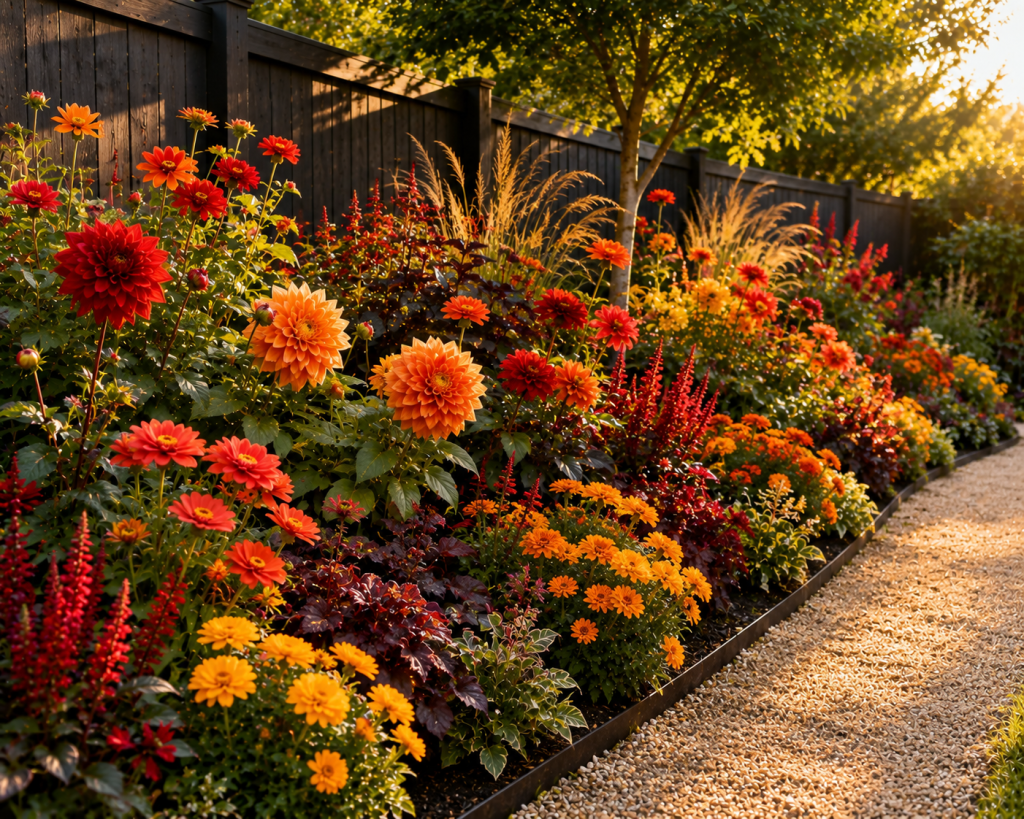
❤️ 11. Create a Bold Red & Orange Flower Bed
Warm-colored flowers can bring energy and drama to a garden, especially when shades of red, orange, copper, and gold are layered together.
To prevent a bold palette from feeling chaotic, repeat the same colors and plant varieties throughout the bed. Dark green and burgundy foliage can provide visual breaks between brighter blooms.
A few ornamental grasses can also soften the planting and add movement.
This type of border works especially well in a sunny location where warm colors become particularly striking in late-afternoon light.
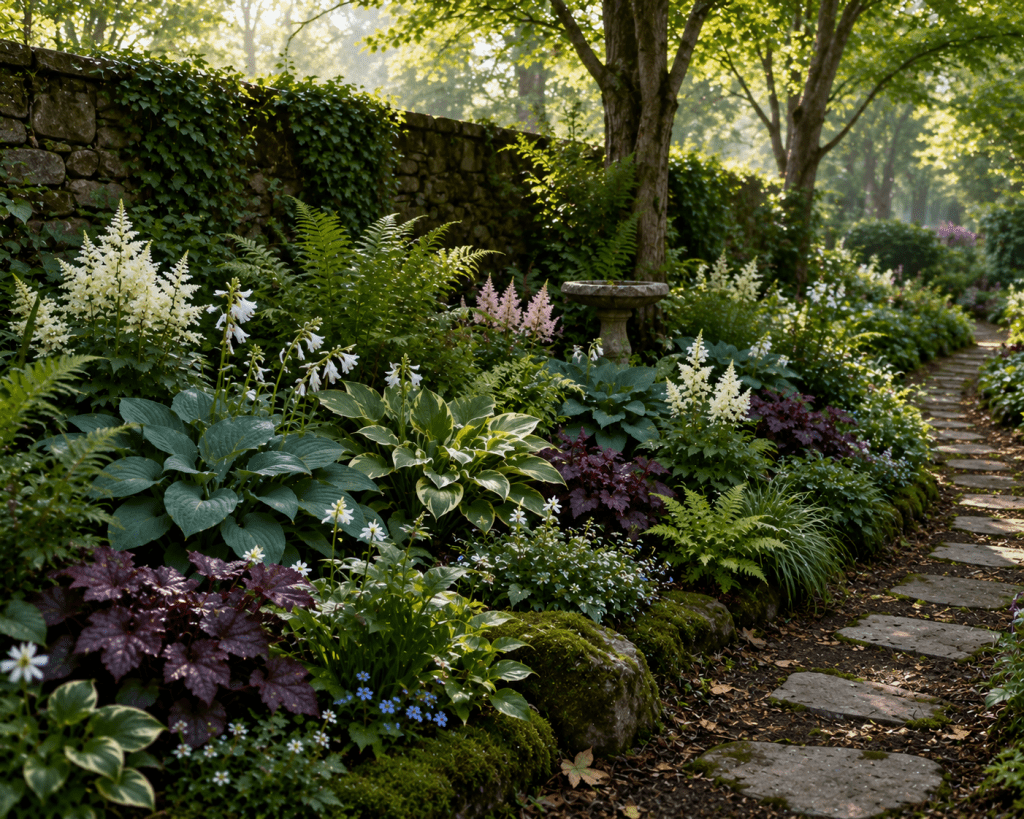
🌿 12. Create a Beautiful Shade Flower Bed
A shady part of the yard doesn’t have to be empty or boring. With plants suited to lower-light conditions, you can create a lush flower bed filled with interesting foliage, texture, and subtle color.
Use foliage as the foundation of the design. Hostas and ferns can provide large contrasting leaf shapes, while shade-tolerant flowering plants add softer seasonal color.
Mixing different shades of green with burgundy and silvery foliage can keep the bed interesting even when fewer plants are flowering.
Before choosing plants, determine whether your space receives light shade, partial shade, or deeper shade, as growing requirements vary.
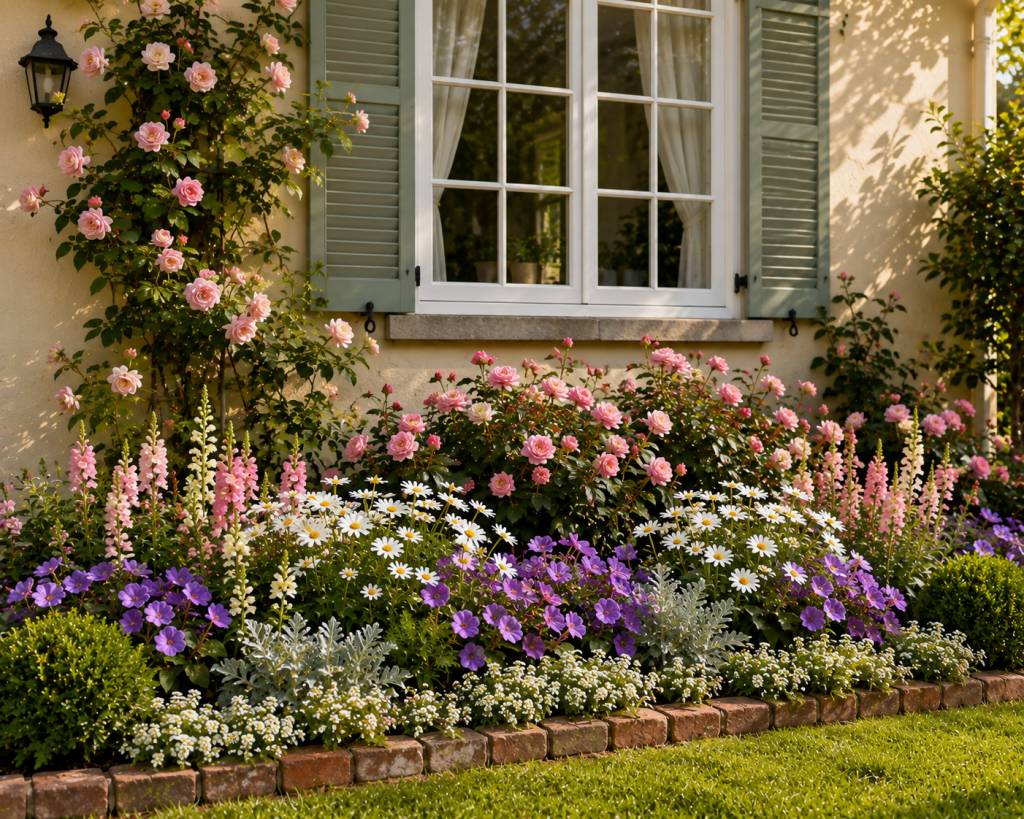
🌷 13. Create a Flower Bed Under a Window
A flower bed beneath a window can soften the exterior of a home and add beautiful color without taking up much yard space.
Keep mature plant height in mind so flowers don’t completely block the window. Compact shrubs and medium-height perennials work well toward the back, while smaller flowers can fill the front edge.
Repeating two or three colors helps the bed look intentional and connects the planting with the exterior of the house.
For extra charm, coordinate the flower colors with shutters, window frames, or other architectural details.
🌹 14. Create a Rose & Lavender Flower Bed
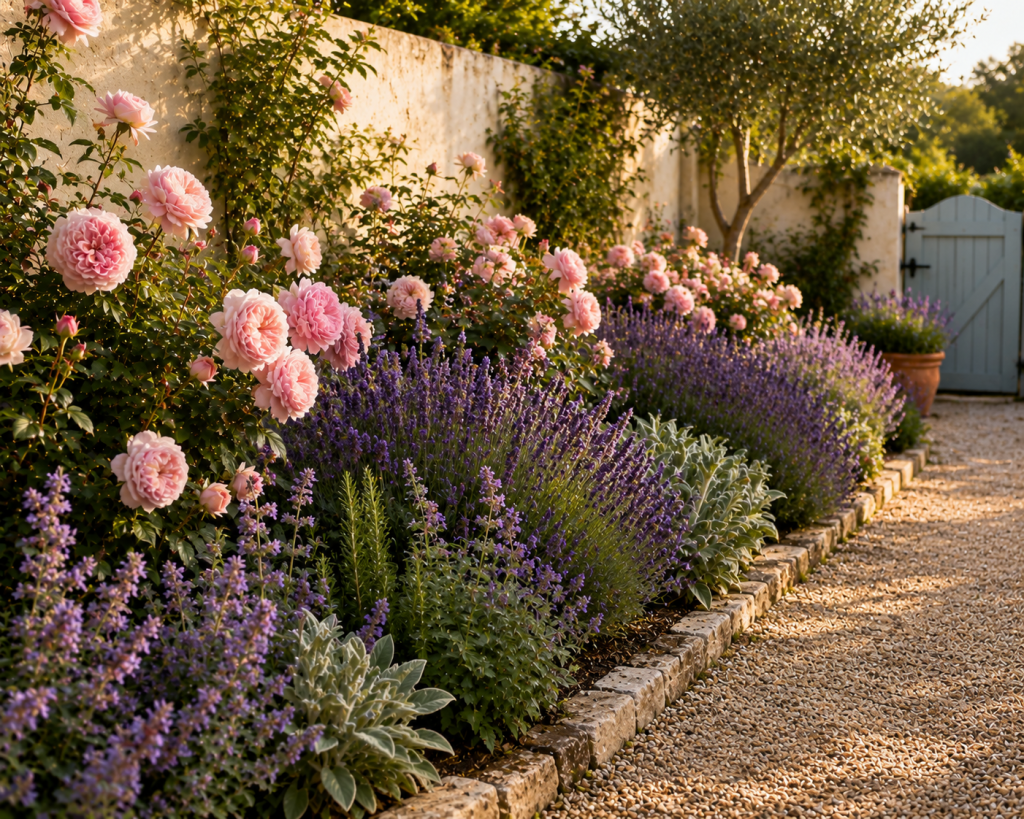
Roses and lavender are a classic garden combination that can create a romantic, fragrant-looking border with plenty of texture and color.
Use roses as the main focal plants and repeat lavender around and between them to create continuity. Keeping the palette limited to blush pink, soft purple, and green helps the bed feel elegant rather than overly busy.
Leave enough room around roses for airflow and consider the mature size of each plant when deciding spacing.
Choose varieties suited to your climate and the amount of sunlight your garden receives.
📬 15. Create a Flower Bed Around the Mailbox
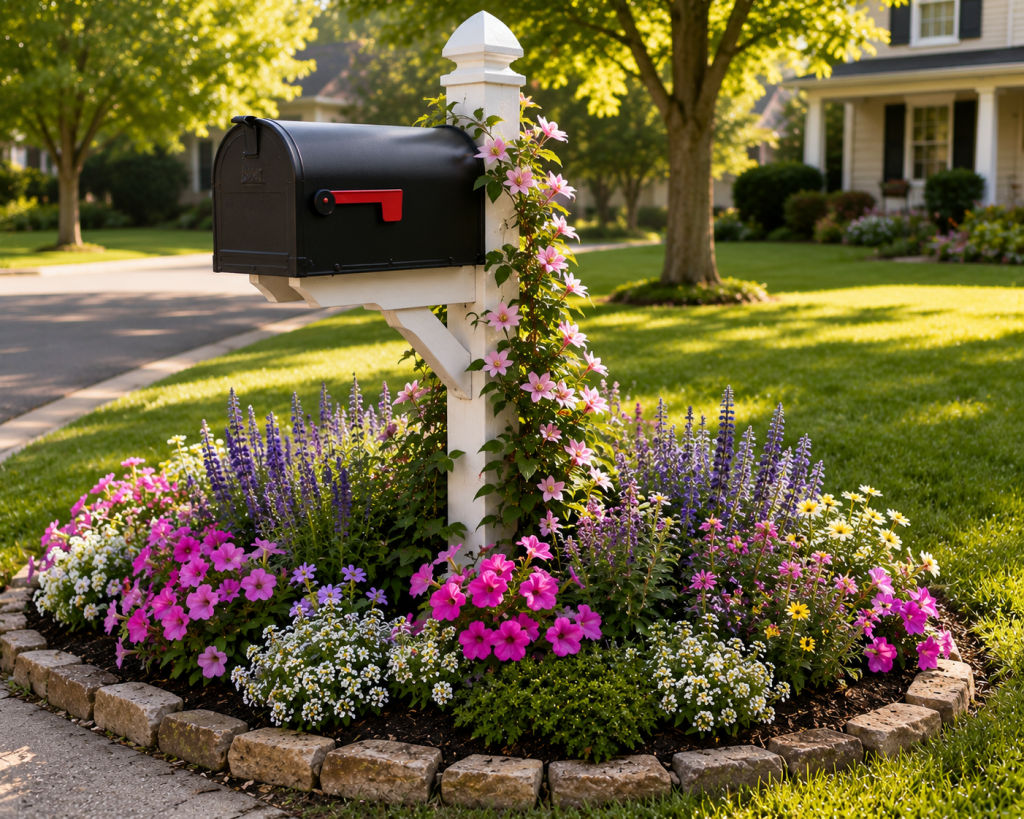
A small flower bed around a mailbox can add instant charm to the front yard without requiring a large gardening project.
Because the planting area is usually compact, choose a limited number of plants and repeat them rather than squeezing in too many varieties.
Low-growing flowers work particularly well because they add color without interfering with access to the mailbox. A small climbing plant can also soften the post, provided it remains easy to maintain.
Keep the bed neatly edged so the small feature looks intentional rather than overgrown.
🌺 16. Create a Layered Flower Bed for Maximum Impact
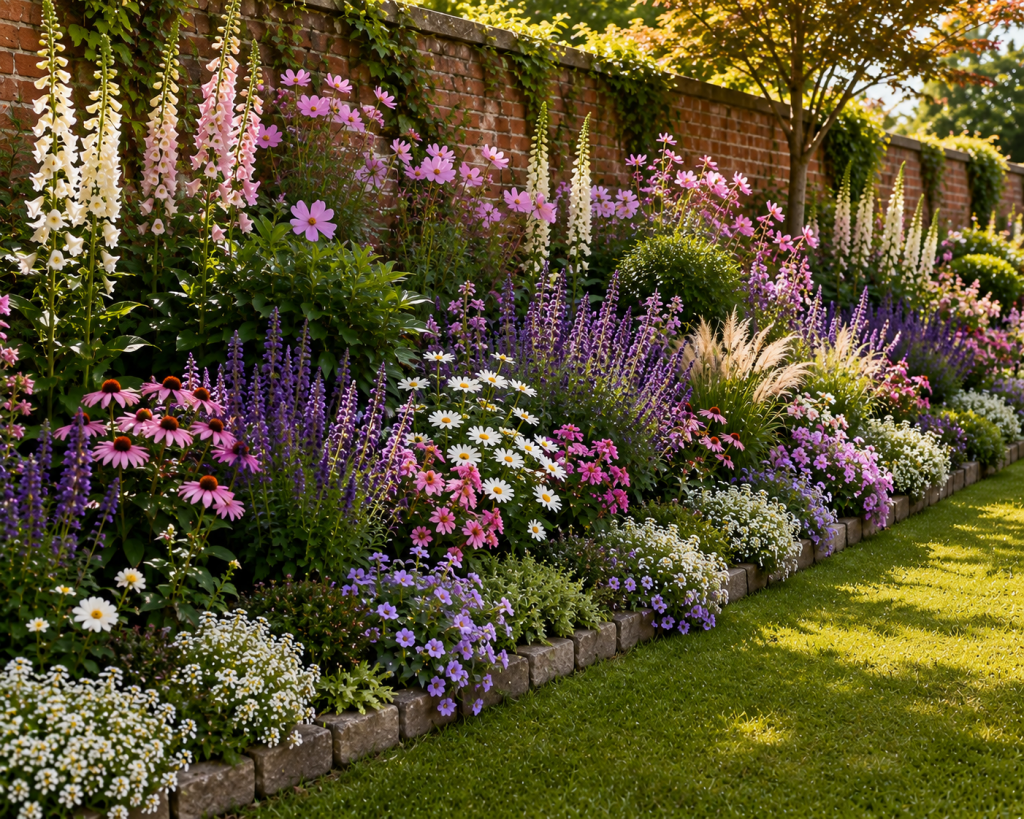
Layering plants by height is one of the easiest ways to make a flower bed look fuller and professionally designed.
Start with taller flowers and shrubs toward the back, add medium-height flowering plants through the center, and finish with compact or trailing plants along the front edge.
Rather than using one of every plant you like, repeat several varieties throughout the bed. This creates rhythm and prevents the planting from looking overly busy.
Consider foliage as carefully as flowers. Different leaf shapes, textures, and shades of green can keep the bed attractive even between flowering periods.
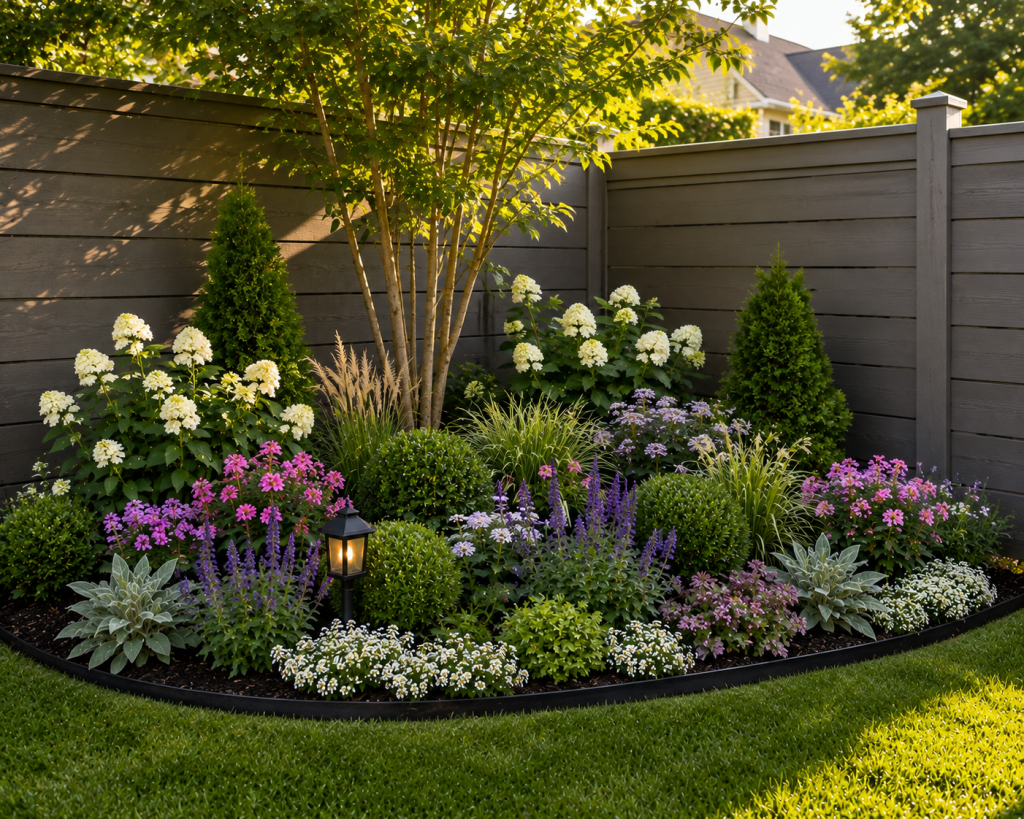
🌿 17. Transform an Empty Corner With a Flower Bed
An unused corner of the yard can become an attractive focal point with a thoughtfully designed flower bed.
A curved bed often works well in corners because it softens the hard angles created by fences or walls. Start with one taller focal plant in the back, then gradually layer smaller shrubs and flowers toward the front.
Limit the number of plant varieties and repeat them to keep a small corner from looking overcrowded.
Adding a few evergreen plants can also help maintain structure when seasonal flowers are no longer blooming.
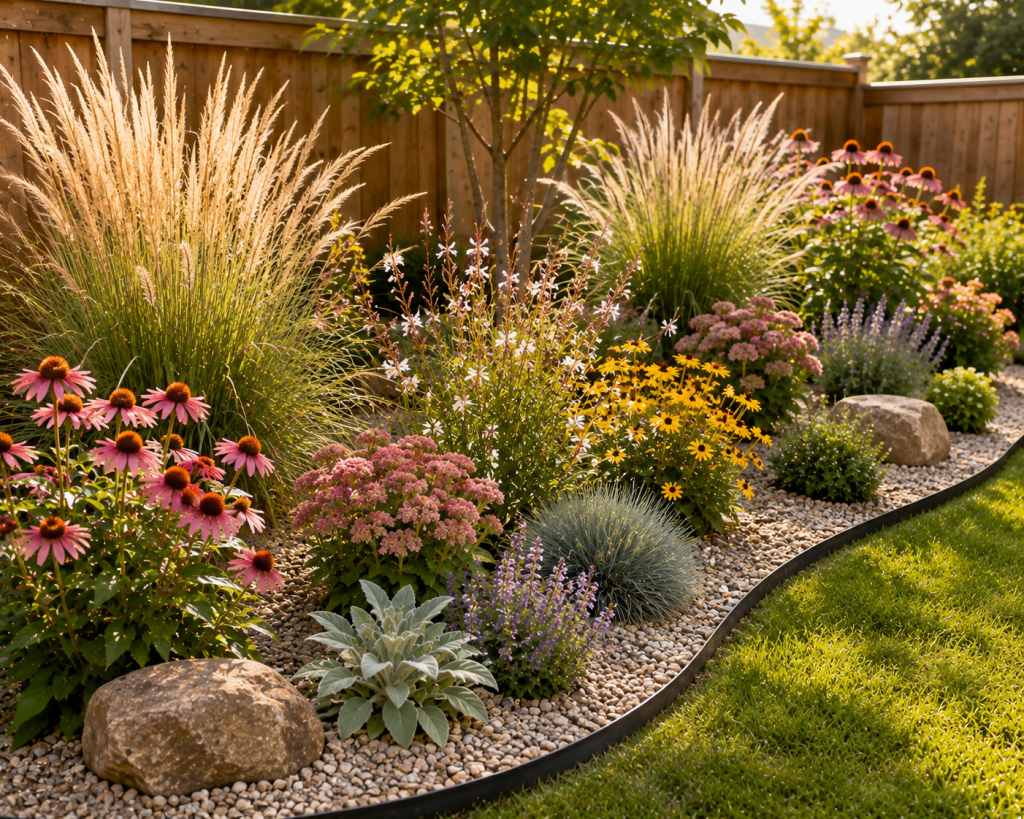
🌾 18. Create a Low-Maintenance Flower Bed
A beautiful flower bed doesn’t necessarily need constant pruning, deadheading, and watering. Choosing hardy plants suited to your local conditions can make maintenance much easier.
Ornamental grasses are especially useful because they add height, movement, and texture without relying entirely on flowers.
Combine them with a limited selection of long-flowering perennials and repeat the same plants throughout the bed for a cohesive design.
Adding mulch or decorative gravel between plants can also help suppress weeds and reduce moisture loss.
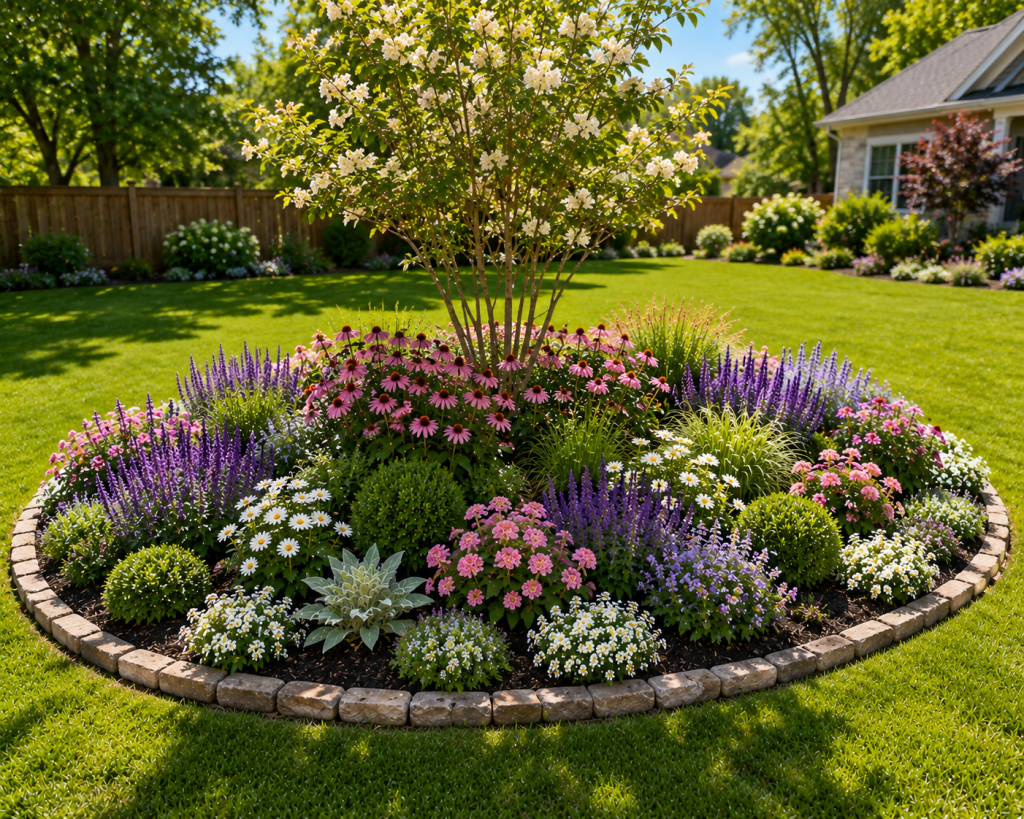
🌺 19. Create an Island Flower Bed in the Lawn
An island flower bed can transform a large stretch of plain lawn by creating a beautiful focal point that can be enjoyed from several directions.
Unlike a border against a fence or wall, an island bed should look attractive from every side. Place the tallest plants toward the center and gradually decrease plant height toward the outer edge.
A curved or oval shape generally feels more natural than a rigid rectangle and is easier to integrate into an existing lawn.
Repeat several plant varieties around the bed so the design feels balanced from different viewpoints.
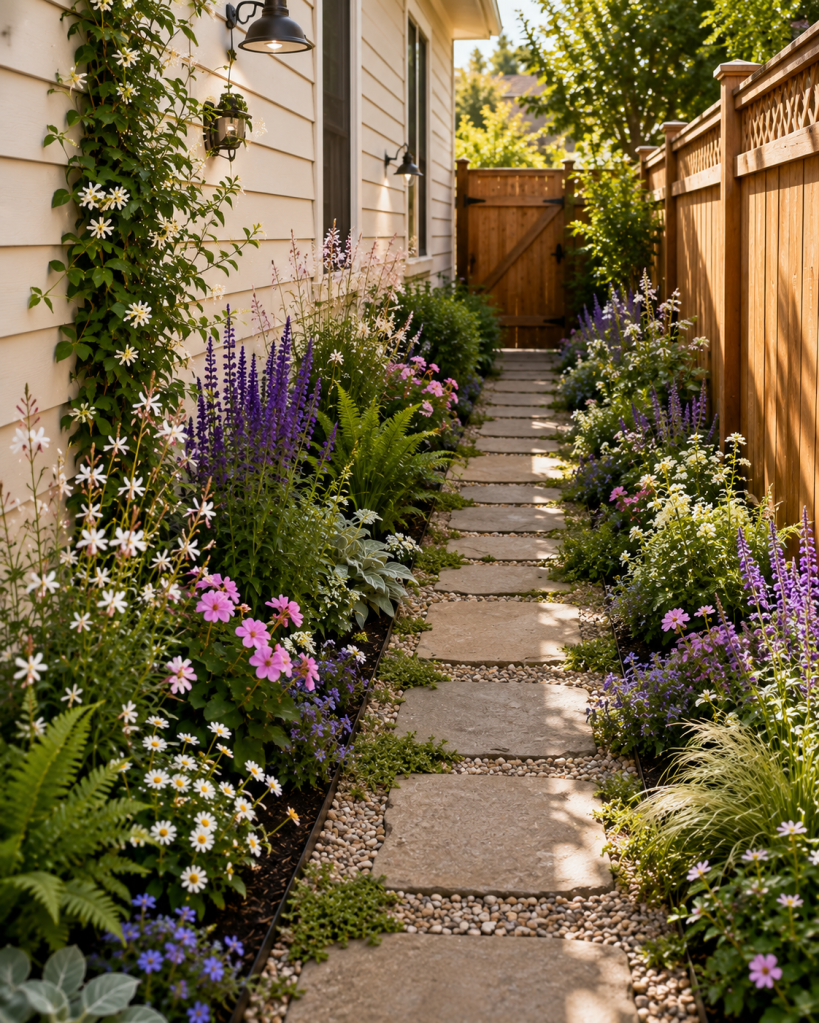
🌿 20. Turn a Narrow Side Yard Into a Flower Garden
A narrow side yard is often overlooked, but even a slim planting bed can add color and character to this part of the home.
The key is choosing plants that won’t become too wide for the available space. Use upright flowers toward the wall or fence and lower-growing plants along the pathway.
Repeating just a few varieties can make a narrow area feel longer and more cohesive.
A simple stepping-stone or gravel path alongside the flowers can also keep the space practical while adding visual interest.
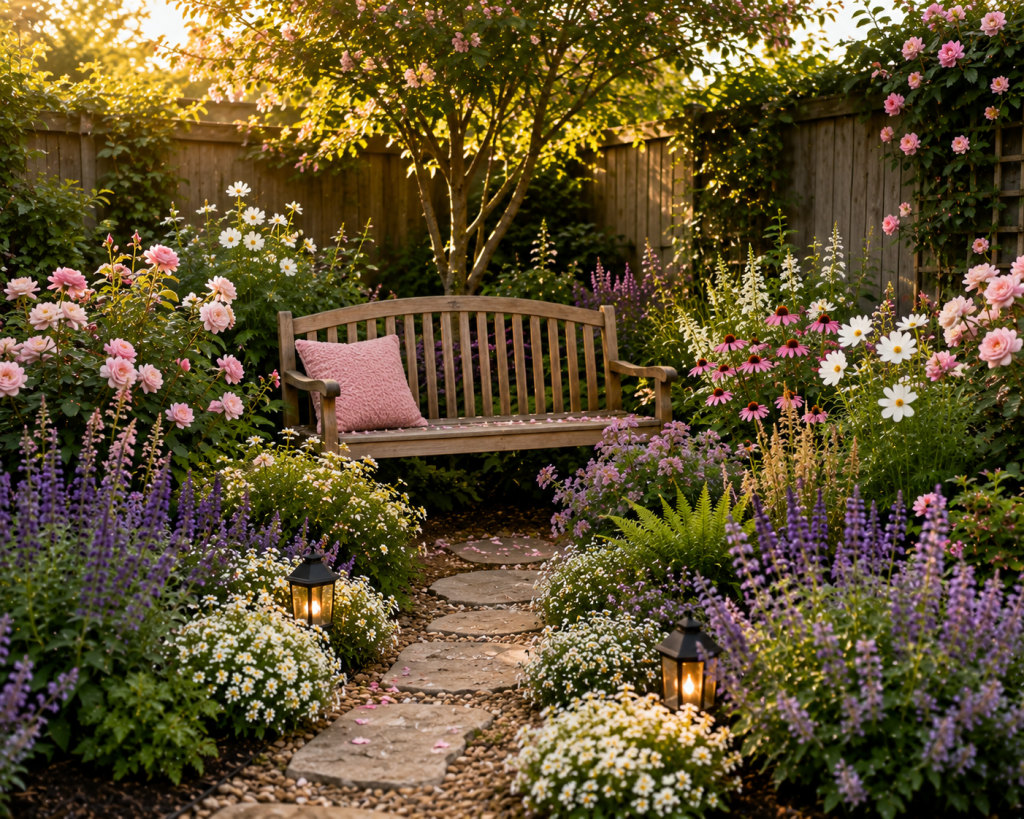
🌷 21. Create a Flower Bed Around a Garden Bench
A flower bed surrounding a garden bench can turn a simple seating spot into one of the most inviting areas of the yard.
Place the bench slightly inside or behind the planting rather than completely isolated on the lawn. Flowers can then wrap naturally around the seating area and create a sense of enclosure.
Use taller plants toward the back and sides while keeping the flowers directly in front of the bench lower so the garden remains open and accessible.
Choose fragrant flowers near the seating area if they suit your growing conditions, and leave enough pathway space for comfortable access.
🌿 Final Thoughts
A beautiful flower bed can completely transform your outdoor space, whether you have a large backyard, a tiny side yard, or simply an unused corner that needs a little color.
From romantic cottage borders and dreamy hydrangea beds to pollinator gardens, raised stone beds, low-maintenance planting, and colorful front-yard displays, there are endless ways to create a garden that reflects your style.
The key is to choose plants that suit your local climate and growing conditions, combine different heights and textures, and repeat a few favorite varieties to create a cohesive look.
You don’t need to redesign your entire yard at once, either. Start with one small flower bed, experiment with colors and plants you love, and gradually build your garden over time.
With a little planning and creativity, even the simplest outdoor space can become a colorful garden you’ll enjoy throughout the seasons. 🌸🌿


Leave a comment